


Imagine ordering a favorite ramen and, instead of a plastic mountain that will outlive a generation, the meal arrives in a bowl grown from mushrooms. Or perhaps, after finishing a juice and realizing the “plastic” bottle is actually made of seaweed, and it’s completely edible.
This isn’t science fiction; it’s the 2026 sustainable packaging for food market. Moving past the “convenience at any cost” era and entering the age of conscious consumption, for food brands today, sustainable packaging isn’t just a “nice-to-have” CSR goal; it is the ultimate brand ambassador.
The Bio-Maker Movement: Nature’s Own Tupperware
The most exciting shift in 2026 is the transition from petroleum-based plastics to materials that feel more like biology than chemistry. Here are the examples of the current market:
- Mushroom Packaging (Mycelium): Grown from the root structure of mushrooms and agricultural waste, this material is fully compostable in backyards. It’s sturdy, insulating, and perfect for protecting fragile food items. On December 17, 2025, S.Lab became the first mycelium (mushroom root) packaging company to obtain a global Home Compostability Certification. This allows food brands to use mushroom-based protective boxes that consumers can literally toss into their garden soil, guaranteed to break down within weeks.
- Seaweed & Algae Films: These are edible, tasteless, and dissolve in water. They are increasingly used for sauce sachets and single-serving snacks. In a massive commercial milestone, on January 5, 2026, Notpla officially completed the rollout of its seaweed-based, home-compostable foodservice packaging across major educational and corporate campuses, including Imperial College London. This move replaces over 450,000 units of single-use plastic per year with a 100% plastic-free and PFAS-free coating.
- Bagasse (Sugarcane Fiber): A byproduct of sugar production, it’s being molded into high-heat-resistant takeaway containers that handle grease far better than paper ever could.
Intelligence Inside: When Packaging Talks Back
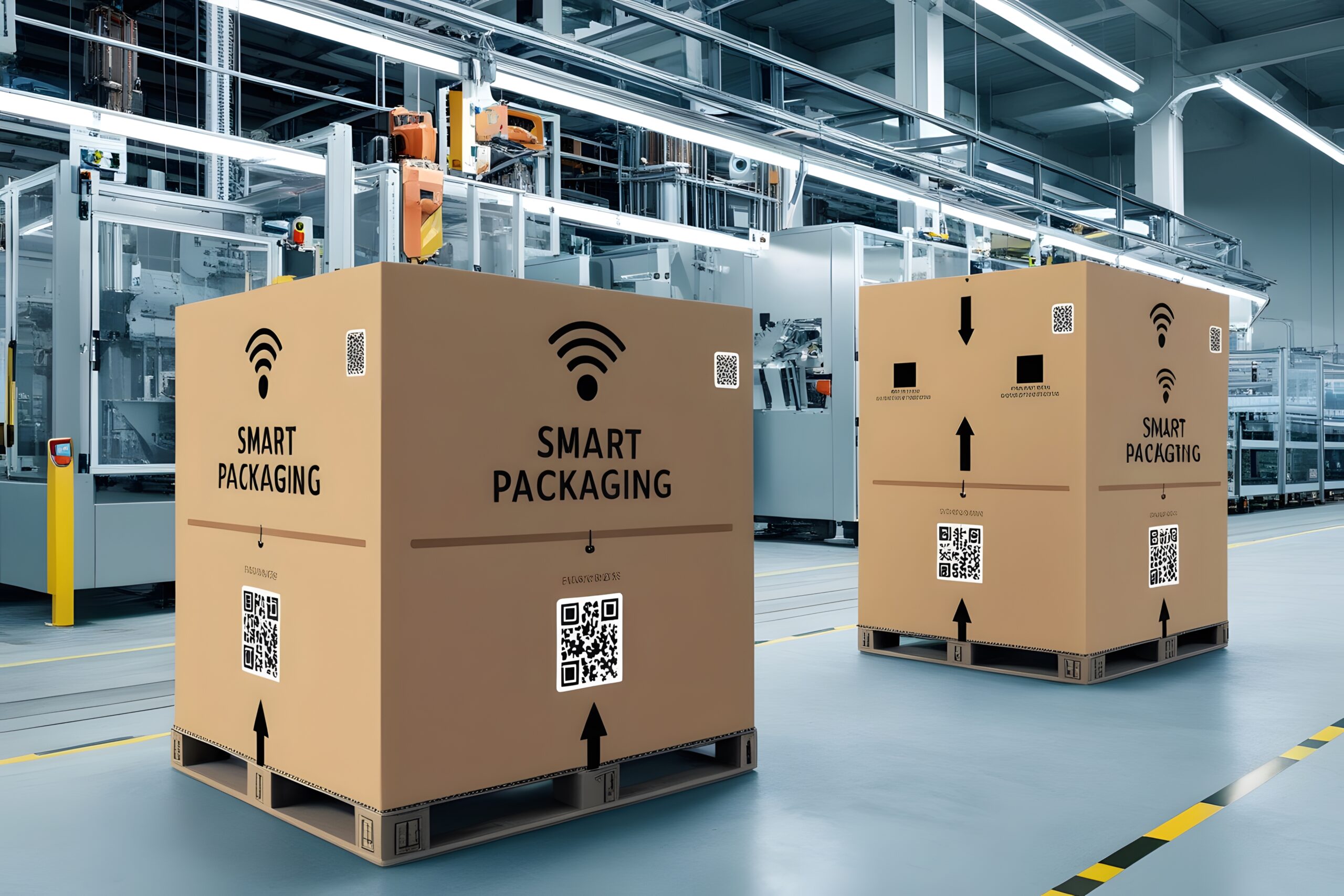
Sustainability in 2026 isn’t just about the material; it’s about the data. The rise of “Smart Packaging,” where the wrapper helps the consumer close the loop.
- Instructional QR Codes: Brands like Danone are now using scan-to-recycle technology. By scanning a code, consumers get real-time guidance on where to drop off that specific container based on their local GPS coordinates.
- Freshness Sensors: Instead of relying on a static “Best Before” date (which leads to massive food waste), bio-reactive labels now change color based on the actual pH levels of the food inside.
- On November 4, 2025, Tetra Pak launched its next-generation Factory OS, an AI-ready digital ecosystem designed to help food producers minimize waste during the packaging process. They also formalized strategic partnerships with Veolia and TERRAX to scale the recycling of “PolyAl” (the polyethylene and aluminum layers in cartons) specifically for the Middle East & Africa sustainable food packaging market.
Why the Market is Biting
Why are brands pivoting so hard? It’s simple: The Green Premium. On January 7, 2026, Forrester emphasized that consumer demand for sustainability remains resilient despite modern economic challenges. Segmenting shoppers into four categories, showing that brands must now provide “proof, not promises” to build authentic trust, satisfy expectations, and mitigate all greenwashing concerns. For instance, on November 5, 2025, Ball Corporation, in partnership with Alcoa and Unilever, scaled the use of ELYSIS carbon-free smelting technology. As of early 2026, they are moving this technology into the food aerosol and beverage sector to produce cans with virtually zero direct greenhouse gas emissions.
The Final Course
The “buffet” of sustainable options is growing. From the EU’s strict new packaging regulations to the rise of Latin America’s flexible eco-films, the message is clear: The loop is closing. The world is finally designing food packaging with its “afterlife” in mind.