


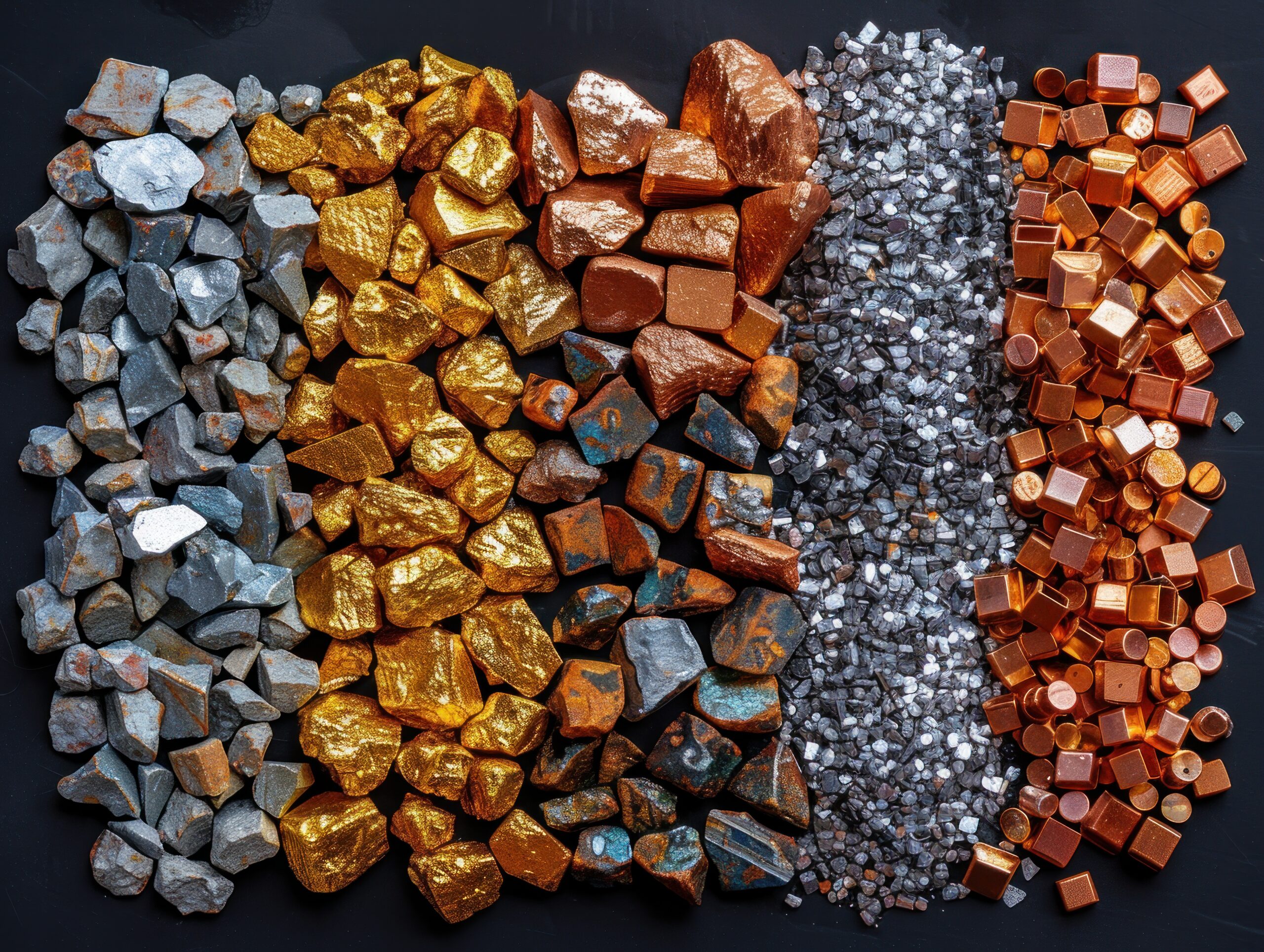
Precious metals, the shiny materials that once adorned crowns and jewelry, are making modern life simple. Because of them, smartphones do not lose their ultra-responsive touchscreen, and electric vehicles do not slow to a crawl. From ultra-tiny electrical pathways in advanced chips to life-saving medical devices and renewable energy systems powering a green future, the precious metal market punches far above its weight.
Precious metals have moved far beyond their traditional association with wealth preservation and luxury goods. Today, they are foundational materials that enable performance, precision, and regulatory compliance across multiple high-growth sectors. Whether it is the reliability of an advanced semiconductor, the efficiency of an EV drivetrain, or the output of a solar installation, precious metals are embedded at critical points where failure is not an option.
- Gold is used in smartphones due to its corrosion-resistant and static-free electrical conduction properties. It is also used in the visors of astronauts’ helmets to deflect harmful radiation.
- Silver’s highest electrical and thermal conductivity makes it suitable for solar panels.
- Whereas, 40% of platinum is used in catalytic converters for vehicles to convert the emissions from the combustion chamber into less harmful gases. Due to its high heat resistance (melting point ~1770 °C) and wear-resistant properties, platinum is also used for contact points of spark plugs.
Industrial Applications of Precious Metals
So, what makes these metals industrially indispensable is not rarity alone, but functionality. Their electrical conductivity, resistance to corrosion, catalytic efficiency, and biocompatibility align directly with the demands of modern manufacturing. As industries push toward miniaturization and electrification, reliance on these metals is becoming structural. The global precious metal market stood at $565.08 billion in 2025 and is expected to grow at a CAGR of 6.6% from 2026 to 2033. Based on applications, the industrial segment led the market with the largest share in 2025 (surpassing Jewelry and Investment) and is also expected to grow at the fastest CAGR of over 7% from 2026 to 2033.
Electronics
The electronics industry remains one of the largest consumers of precious metals, driven by the need for reliability at increasingly smaller scales. Gold continues to be widely used in connectors, bonding wires, and semiconductor packaging because it does not oxidize and ensures stable signal transmission over long product lifecycles. Silver, with the highest electrical conductivity of any metal, is essential in printed circuit boards, power electronics, and advanced sensors. As AI and automation accelerate miniaturization, the use of gold, silver, platinum, and palladium in high-precision electronic parts has risen.
In 2024-25, TSMC and Samsung Electronics both expanded advanced packaging lines for AI and high-performance computing chips, increasing the use of gold bonding wires and silver-based interconnect materials to support higher thermal and electrical loads. Similarly, Heraeus Electronics has introduced silver sintering materials designed for next-generation power semiconductors, targeting applications in data centers and industrial automation. These materials are now being adopted by electronics manufacturers seeking higher efficiency and lower failure rates.
Automotive
The automotive sector represents a dual demand story for precious metals. On one side, platinum group metals remain essential in catalytic converters for internal combustion and hybrid vehicles, ensuring compliance with strict emission norms. On the other hand, the rapid expansion of electric vehicles is creating new demand streams, particularly for silver and platinum.
Electric vehicles require significantly more silver than conventional cars, primarily in power electronics, battery management systems, charging infrastructure, and onboard sensors. They consume 67-79% more silver than ICE vehicles. Moreover, companies such as Toyota and Hyundai continued commercial deployments of hydrogen fuel cell vehicles in 2025, reinforcing platinum’s role as a core catalyst material in fuel cell stacks.
Medical Devices
In healthcare manufacturing, precious metals play a role where material failure can have direct human consequences. For example, platinum and its alloys are widely used in implantable devices such as pacemakers, neurostimulators, and cardiovascular stents due to their biocompatibility and resistance to bodily fluids. Platinum-based drugs (such as cisplatin) are also used in chemotherapy. Manufacturers such as Medtronic have expanded the use of platinum-iridium alloys in next-generation cardiac rhythm management devices, citing improved durability and long-term performance.
Companies also make advanced wound care products incorporating silver-based antimicrobial layers, responding to rising concerns over hospital-acquired infections and antibiotic resistance. The use of precious metals helps medical device companies meet stringent regulatory standards while improving product differentiation. These materials support longer device lifespans, fewer recalls, and higher clinician confidence.
Renewable Energy Technologies
The global push toward decarbonization has significantly increased the industrial relevance of precious metals, particularly silver and platinum. Solar photovoltaic manufacturing is one of the fastest-growing demand centers, with silver used in conductive pastes that enable efficient electron flow within solar cells. According to research from Ghent University (Belgium), the PV industry may account for 40% of global silver demand by 2030.
Meanwhile, platinum group metals remain central to hydrogen fuel cell technologies, which are gaining policy and investment support as part of long-term clean energy strategies. In September 2025, Heraeus Precious Metals announced it was launching new hydrogen labs in Shanghai, built around platinum-catalyzed proton exchange membrane systems, showing continued investment in platinum as a core catalyst for renewable hydrogen technologies. Tanaka Precious Metal Technologies also won a technology award for a commercially applied precious metal-based catalyst for proton exchange membrane (PEM) water electrolysis, a key process in storing renewable power as hydrogen.
The Bottom Line
The relevance of precious metals is not confined only to niche or legacy applications. The precious metal market now sits at the intersection of technology advancement and regulatory compliance. Electronics manufacturers depend on them for reliability at microscopic scales, and automakers use them to balance performance with emissions mandates. Whereas healthcare companies rely on them for safety, and renewable energy developers need them to make clean technologies commercially viable.