




Key Highlights
- Aluminum: Smelter restarts are supporting supply recovery, but regional premiums and logistics remain important.
- Zinc: Lower mine production and higher energy costs are tightening supply conditions.
- Lithium: Seasonal battery demand is supporting prices while additional ore supplies move through processing.
- Specialty metals: Export restrictions and limited supplier availability are increasing sourcing risks.
- Precious metals: Treasury yields, the U.S. dollar, and geopolitical tensions are driving price volatility.
In this article
What Is Reshaping Non-Ferrous Metals?
Beyond Price Movements: What Is Reshaping Non-Ferrous Metals?
The non-ferrous metals market is increasingly influenced by upstream supply constraints, changing production economics, regional availability, and financial market movements. Copper, aluminum, zinc, lithium, and precious metals serve industries ranging from automotive manufacturing and renewable energy to electronics and aerospace. However, their prices do not respond uniformly to market developments.
For procurement professionals, monitoring benchmark prices alone may not provide a complete picture of market conditions. Concentrate availability, smelter maintenance, energy costs, shipping routes, and regional premiums can all influence the price and timing of physical deliveries.
This makes non-ferrous metals pricing intelligence increasingly important for understanding how developments across the supply chain translate into purchasing costs and material availability.
1. Aluminum Recovery Meets Persistent Supply-Chain Challenges
Aluminum markets are navigating a recovery phase as facilities in the Gulf region gradually restore production following earlier disruptions. Emirates Global Aluminium (EGA), for example, restarted 50% of its Al Taweelah smelter, marking progress toward recovering affected supply.
However, restarting production does not immediately restore the entire distribution network. Material must move through logistics channels before inventories and regional availability fully reflect the improvement.
For buyers, this creates several considerations:
- Regional premiums: Prices may differ depending on local availability and delivery conditions.
- Shipping reliability: Route disruptions and transit times can affect procurement schedules.
- Inventory rebuilding: Restored production does not guarantee immediate replenishment of exchange inventories or nearby physical markets.
The key question is not simply whether aluminum production is recovering, but how quickly that recovery translates into dependable, competitively priced deliveries.
2. Copper and Zinc Reveal Different Upstream Risks
Copper and zinc illustrate why metal-specific supply analysis is essential.
Copper smelters are facing shortages of copper concentrate and tighter scrap availability. Lower returns from sulfuric acid, a smelting byproduct, are also weakening an additional revenue stream. Planned maintenance at major Chinese refiners during October and November adds uncertainty around future refined copper deliveries.
Meanwhile, elevated copper prices are encouraging downstream buyers to remain cautious about building inventories. This creates a difficult balance between securing material early and avoiding expensive stockpiles.
Zinc faces a different challenge. Lower global mine production during the first half of the year has intensified competition for concentrate, while accessible exchange inventories remain low. Higher energy costs are also putting pressure on refining margins in Western markets.
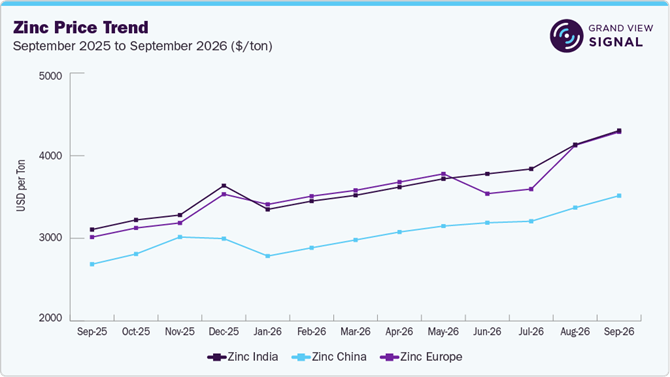
Get Full Access to Price Trends & Market Drivers.
Consequently, copper buyers need to monitor concentrate availability, refinery maintenance, and scrap flows, while zinc buyers should pay particular attention to mine output, energy costs, and smelter profitability.
3. Lithium and Specialty Metals: Availability Matters as Much as Demand
Lithium carbonate rebounded in September following a sharp earlier decline, supported by seasonal demand from battery and energy storage sectors. However, a price recovery does not automatically indicate a physical shortage.
China’s record spodumene ore imports in August could support higher converter output as the material moves through processing. Yet, converting imported ore into usable battery materials requires processing, testing, and delivery time. The impact on available supply therefore depends on how quickly material enters the market and is absorbed into existing inventories.
Cobalt presents a different supply risk. Export quotas in the Democratic Republic of Congo are restricting raw material flows before they reach refiners.
Specialty metals, including antimony and rare-earth carbonates, require even more careful sourcing. Export regulations, approved seller lists, processing capacity, product specifications, and limited substitute suppliers can matter as much as quoted prices.
Procurement teams should verify actual deliverability, material grades, minimum order quantities, and lead times before committing to purchases.
4. Precious Metals: Reading the Signals Behind Gold and Silver
Precious metals experienced significant volatility in late September as geopolitical tensions, oil prices, inflation expectations, Treasury yields, and the U.S. dollar pulled market sentiment in different directions.
Middle East tensions supported safe-haven demand, while rising oil prices increased inflation concerns and expectations of potentially higher U.S. interest rates. As Treasury yields and the dollar strengthened, non-yielding gold became less attractive to some investors.
Gold subsequently fell sharply before recovering part of its losses, ending September at USD 4,361.8 per troy ounce, according to the supplied market update.
Other precious metals have distinct demand drivers. Silver combines investment demand with industrial applications, while platinum, palladium, and rhodium remain closely connected to automotive manufacturing activity and physical supply conditions.
Monitoring economic data, oil prices, Treasury yields, and currency movements can help buyers and market analysts better interpret precious metals price changes.
Turning Market Signals Into Better Procurement Decisions
Non-ferrous metals markets are shaped by interconnected factors, from mine production and refinery maintenance to geopolitical restrictions and financial market movements. Each metal has its own supply dynamics, making a single approach to price monitoring insufficient.
Grand View Signal helps procurement teams and market analysts track metal prices, feedstock constraints, regional premiums, supply-chain disruptions, and broader market developments.
Frequently Asked Questions
1. What is non-ferrous metals pricing intelligence?
It is the analysis of non-ferrous metal prices alongside supply, demand, production, regional premiums, and other factors affecting market conditions.
2. Why are aluminum prices influenced by regional premiums?
Differences in local supply, shipping routes, logistics, and delivery availability can create price variations between regions.
3. What is currently affecting copper supply?
Copper concentrate shortages, tighter scrap availability, weaker byproduct revenues, and planned refinery maintenance are important supply-side factors.
4. Why doesn’t rising lithium demand always mean an immediate shortage?
Additional ore must be processed, tested, and delivered before it becomes available as usable battery material.
5. Which factors should buyers monitor when tracking precious metals?
Key factors include U.S. Treasury yields, dollar movements, oil prices, geopolitical developments, and industrial demand.