




Key Highlights
- Upstream feedstock volatility drives up core polymer production costs.
- Downstream converter resistance caps sustained resin price increases globally.
- Nylon 6 gains strength from tight caprolactam feedstock supply.
- Middle East capacity additions reshape long-term global trade flows.
- Strict regulatory frameworks mandate higher post-consumer recycled polymer content.
- Real-time commodity data enables smarter, data-driven resin procurement decisions.
In this article
The Plastics Pricing Paradox: Higher Costs, Cautious Buyers
The global plastics market is facing a growing disconnect between production costs and downstream purchasing power. While petrochemical feedstocks and intermediate chemicals continue to influence resin pricing, manufacturers and industrial converters are finding it difficult to pass every increase along the supply chain.
For packaging producers, automotive suppliers, and industrial manufacturers, this creates a difficult balancing act: securing sufficient raw materials without allowing procurement costs to erode profitability.
Grand View Signal’s Plastics Pricing Intelligence analysis highlights how feedstock economics, regional supply conditions, inventory discipline, and sustainability policies are reshaping polymer markets. Understanding these interconnected pressures is becoming essential for businesses that depend on predictable resin availability and competitive material costs.
1. The Cost Ripple Begins Before Resin Reaches the Factory
Plastic pricing is closely linked to the economics of upstream petrochemicals. Changes in crude oil, naphtha, and natural gas liquids can influence the production costs of key polymers, including high-density polyethylene (HDPE), low-density polyethylene (LDPE), linear low-density polyethylene (LLDPE), and polypropylene (PP).
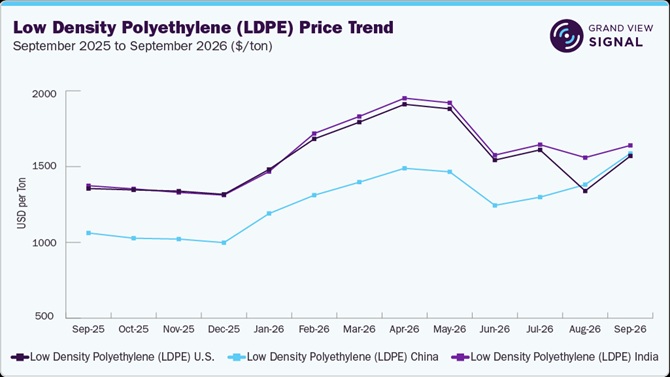
Get Full Access to Price Trends & Market Drivers.
When upstream feedstock values increase, resin producers may attempt to raise selling prices to protect margins. However, downstream converters must evaluate these increases against their own production expenses, customer contracts, and end-market demand.
Engineering plastics face additional complexities. Nylon 6, for example, is closely linked to caprolactam availability, while Nylon 66 and polycarbonate depend on different intermediate chemical chains. Supply disruptions or rising intermediate costs can therefore create divergent pricing patterns even within the same broader market.
For procurement teams, monitoring resin prices alone may provide an incomplete picture. Tracking upstream feedstocks and relevant chemical intermediates can help identify potential cost pressures before they appear in supplier quotations.
2. One Global Market, Several Regional Realities
Regional differences are becoming increasingly important in plastics procurement.
In the United States, domestic production of key plastic polymers rose 2.3% month-on-month to 9.0 billion pounds in the reporting period described in the source analysis. Production nevertheless remained 2.9% below the corresponding period a year earlier. Domestic sales and internal usage increased 4.6% month-on-month and year-on-year to 8.9 billion pounds, indicating comparatively firm domestic consumption.
India presented a different picture. Higher feedstock costs prompted resin producers to revise prices upward across polyethylene, polypropylene, and PVC. Yet converters facing affordability constraints reduced purchasing and concentrated on immediate production requirements, limiting the market’s ability to sustain higher prices.
China also demonstrated considerable divergence. Polyolefins faced pressure from substantial domestic capacity and cautious downstream procurement, while Nylon 6 gained support from higher caprolactam costs and supply constraints. ABS and polystyrene, meanwhile, experienced softer conditions amid adjustments in consumer goods and electrical appliance demand.
These differences demonstrate why procurement decisions should reflect regional supply-demand fundamentals rather than relying exclusively on global price movements.
3. New Capacity Is Changing the Competitive Landscape
Supply expansion can reshape plastics markets even when demand remains uncertain.
The Middle East is strengthening its position in global petrochemicals through major capacity investments. Polyolefin expansion projects in the United Arab Emirates are designed to add approximately 1.4 million tons of annual capacity, potentially influencing export volumes, grade availability, and regional price competition as facilities ramp up production.
Additional supply can create opportunities for buyers seeking alternative sourcing channels. However, the benefits depend on actual production availability, export flows, logistics, and compatibility with required polymer grades.
Meanwhile, regional manufacturing developments are supporting specialized demand. Morocco’s automotive export growth, for instance, highlights the importance of its expanding vehicle manufacturing ecosystem for engineering resins and high-performance polymer components.
For buyers, the strategic question is not simply where new capacity is being built, but how that capacity could change supplier competition and delivered costs in their own markets.
4. Lean Inventories Are Limiting Resin Price Increases
One of the most important developments in the plastics value chain is the shift toward cautious inventory management.
When producers announce price increases, converters may previously have responded by purchasing additional resin ahead of anticipated revisions. Under current cost and demand pressures, many buyers instead prefer smaller, regular orders aligned with confirmed production requirements.
This approach protects working capital and reduces the risk of holding expensive inventory if prices subsequently correct. However, it also limits the ability of producers to sustain price increases without stronger downstream consumption.
The result is a market in which higher feedstock costs can support initial resin price revisions, but buyer resistance creates a ceiling on further increases.
Procurement teams can respond by monitoring inventory coverage, comparing supplier offers, reviewing contract terms, and tracking relevant feedstock benchmarks. These measures can help balance supply security against the financial risks of excessive forward buying.
5. Sustainability Rules Are Becoming Part of Procurement Economics
Plastics sourcing is increasingly influenced by regulatory requirements alongside conventional cost considerations.
In Europe, initiatives concerning harmonized end-of-waste criteria for recycled plastics are intended to clarify the conditions under which recycled materials can be treated as secondary raw materials. Such developments are relevant to converters and brand owners evaluating post-consumer recycled content in their products.
In the United States, environmental and waste-management frameworks also influence decisions concerning industrial waste reduction, sustainable packaging, and chemical inventory management.
These considerations add another dimension to resin purchasing. Buyers must evaluate not only the immediate price of virgin polymers but also material specifications, recycled-content requirements, supply availability, and compliance obligations.
Recycled materials may offer sourcing flexibility, but their suitability depends on application requirements, quality, and commercial availability. Integrating these considerations into procurement planning can help companies prepare for changing material-selection expectations.
Turning Plastics Market Intelligence into Action
The plastics market is shaped by more than the latest resin quotation. Feedstock costs, regional demand, new production capacity, inventory discipline, and sustainability requirements all influence purchasing economics.
Grand View Signal provides pricing assessments, historical trends, and commodity market intelligence across 200 commodity markets to support more informed procurement decisions. For plastics buyers, combining resin pricing with upstream cost indicators and regional market developments can improve visibility into potential risks and sourcing opportunities.
Frequently Asked Questions
1. What factors are driving global plastics price volatility?
Key factors include crude oil and petrochemical feedstock costs, intermediate chemical availability, regional production capacity, downstream demand, and logistics conditions.
2. Why are rising resin production costs not always reflected in selling prices?
Converters may resist price increases when customer demand is weak or finished-product prices cannot be raised sufficiently. Reduced purchasing can limit producers’ ability to pass through higher costs.
3. How do regional differences affect plastics procurement?
Production capacity, energy and feedstock costs, domestic demand, and import competition vary across regions. Buyers should compare local market conditions and delivered costs before choosing suppliers.
4. How can new polymer capacity affect global resin markets?
Additional capacity can increase supply availability, influence export flows, and intensify competition among producers. The actual price impact depends on production ramp-up, demand, and logistics.
5. How are sustainability regulations influencing plastics sourcing?
Recycling frameworks and waste-management requirements are encouraging businesses to assess recycled materials alongside virgin polymers. Procurement decisions increasingly need to account for material suitability, availability, cost, and regulatory compliance.