




Key Highlights
- China’s weak steel demand is keeping inventories elevated.
- Iron ore’s early September rally quickly reversed.
- Rising input costs are squeezing steelmakers’ margins.
- Indian prices gained support from tighter domestic supply.
- European import quotas are reshaping steel sourcing decisions.
In this article
Why Global Ferrous Markets Are Defying Seasonal Expectations
Why Global Ferrous Markets Are Defying Seasonal Expectations
The global ferrous metals market is experiencing a complicated mix of cost pressures, uneven demand, and shifting trade conditions. September typically offers steelmakers an opportunity to capitalize on renewed industrial activity after the summer slowdown. This year, however, the expected seasonal recovery struggled to materialize.
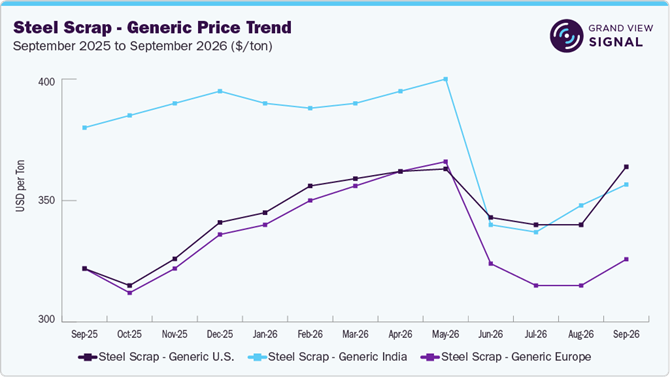
According to Grand View Signal’s Ferrous Metals Pricing Intelligence analysis, steel scrap was a relative outperformer, recording average month-on-month growth of 4.3% across major geographies. Yet, this strength did not translate into a broad-based rally across iron ore and finished steel.
Five less obvious forces explain why the market remains difficult to navigate.
1. China’s Inventory Problem Is Deeper Than Weak Sales
China remains central to global steel price formation, but its domestic market is facing a persistent imbalance between supply and consumption. The traditional “Golden September” period failed to deliver the anticipated demand recovery, particularly in construction-related steel.
The property sector’s continued weakness restricted rebar sales, while demand for hot-rolled coil (HRC) also remained below the previous year’s levels. Mills responded by reducing production during September, but the adjustment was insufficient to prevent inventories from increasing.
By September 20, finished-steel inventories at China Iron and Steel Association-monitored mills reached 17.08 million tons, up 5.1% from late August. By September 24, domestic HRC prices had fallen to CNY 3,320 per ton, while rebar stood at CNY 3,090 per ton.
The underlying signal: Production cuts do not automatically restore pricing power when end-user demand remains weak. Elevated inventories can continue weighing on prices even after mills begin reducing output.
For international buyers, Chinese inventory levels and export activity remain important indicators of potential price pressure across other regions.
2. Iron Ore’s Rally Revealed the Difference Between Restocking and Recovery
Iron ore prices initially strengthened in September as Chinese steelmakers replenished supplies ahead of the Golden Week holiday. However, this purchasing activity provided only temporary support.
The 62% Fe iron ore benchmark delivered to Qingdao moved above USD 100 per ton on September 4 before declining to USD 96.6 per ton by September 25.
Once immediate procurement requirements were met, buying momentum weakened. Rising port inventories and softer finished-steel sales further reduced the incentive to secure additional material at elevated prices.
Higher coking coal and coke costs added another complication. As steelmaking expenses increased while finished-steel prices weakened, mills had less flexibility to absorb higher iron ore costs.
The underlying signal: Short-term procurement spikes should not be mistaken for sustained demand growth. Iron ore purchasing decisions increasingly depend on mill operating rates, available inventories, and the profitability of finished-steel production.
3. India’s Steel Price Strength Has a Cost Side
India experienced a different pricing environment, demonstrating why regional market conditions cannot be interpreted through a single global trend.
Rising international metallurgical coal prices increased production costs for integrated steelmakers. Meanwhile, scheduled maintenance at major domestic facilities reduced spot availability, and relatively lean distributor inventories provided additional support to prices.
Expectations of stronger post-monsoon infrastructure activity and automotive procurement also helped improve buyer sentiment. These factors contributed to an approximately 4% increase in Indian HRC prices between August and early September.
However, higher production costs did not guarantee equivalent improvements in profitability. Competitive imports, including Chinese finished steel, limited domestic producers’ ability to pass every cost increase on to customers.
The underlying signal: Price increases driven by supply constraints and higher input costs may be less sustainable when buyers retain access to competitively priced imports.
Procurement teams should therefore evaluate domestic price movements alongside import offers, freight costs, and regional supply availability.
4. European Steel Quotas Have Made Sourcing More Complex
In Europe, regulatory conditions have become an increasingly important component of steel procurement economics.
Under the quota framework described in the September market analysis, specified volumes of steel can enter without the additional safeguard duty, while a 50% duty applies once the relevant quota is exhausted.
Consequently, an attractive overseas quotation does not necessarily translate into a competitive landed price. Buyers must also consider product-category limits, country-of-origin eligibility, quota availability, and potential duty exposure.
The European Commission opened a consultation on September 28 to gather feedback from producers, users, and exporters on the functioning of the quota system.
Import protection can reduce competitive pressure on certain domestic product categories, but it cannot independently generate demand when consumption remains subdued.
The underlying signal: Steel purchasing decisions increasingly require a combined assessment of market prices, trade regulations, and total landed costs.
5. Scrap Strength Is Exposing the Limits of Steel Mill Margins
Steel scrap emerged as a comparatively strong segment in September, supported by firmer overseas offers and limited local availability of alternative metallic inputs in Turkey.
Several Turkish mills increased their scrap purchase prices toward the end of the month. Nevertheless, buyers remained cautious because higher feedstock costs must ultimately be recovered through finished-steel sales.
Get Full Access to Price Trends & Market Drivers.
When rebar and billet demand weakens, mills face a difficult choice: accept lower conversion margins or delay purchases until market conditions improve.
Price movements also differ by scrap category, including shredded, heavy melting, demolition, cutting, and stainless grades. Local availability, material specifications, and immediate production requirements influence each segment differently.
The underlying signal: Rising scrap prices do not necessarily indicate a stronger steel market. They can instead reflect tighter feedstock availability in a market where finished-steel demand remains constrained.
Turning Ferrous Market Signals Into Better Decisions
The September market demonstrates why tracking individual commodity prices is not enough. China’s inventories, iron ore procurement cycles, Indian production costs, European import rules, and Turkish scrap demand all influence pricing through different mechanisms.
Grand View Signal’s Ferrous Metals Pricing Intelligence platform brings together pricing assessments, historical trends, regional comparisons, and market intelligence across iron ore, finished steel, and scrap categories. These insights can help procurement professionals evaluate supplier offers, monitor regional price differences, and identify risks before committing to purchasing decisions.
For steel buyers and producers, the objective is not simply to anticipate the next price movement. It is to understand what is driving that movement and whether it reflects a lasting change in market fundamentals.
Frequently Asked Questions
1. Why did the global steel market fail to experience its usual September rally?
Weak construction demand in China, rising steel inventories, and limited recovery in finished-steel consumption prevented seasonal optimism from translating into stronger prices.
2. What caused iron ore prices to decline after their early September increase?
Pre-holiday restocking temporarily lifted demand. Once mills completed their immediate purchases, weaker steel sales, higher port inventories, and pressure on steelmaking margins contributed to the reversal.
3. Why did Indian steel prices increase despite global market weakness?
Higher metallurgical coal costs, planned mill maintenance, tighter spot availability, and expectations of post-monsoon demand supported Indian HRC prices. Competitive imports nevertheless limited pricing power.
4. How do European steel import quotas affect procurement decisions?
Quota availability, product eligibility, country of origin, and potential duties influence the final landed cost. Buyers must assess these factors alongside the quoted steel price before placing orders.
5. Does rising steel scrap pricing indicate a stronger steel market?
Not necessarily. Scrap prices can increase because of limited feedstock availability even when finished-steel demand is weak. Buyers should evaluate scrap costs alongside rebar and billet prices, conversion expenses, and mill margins.