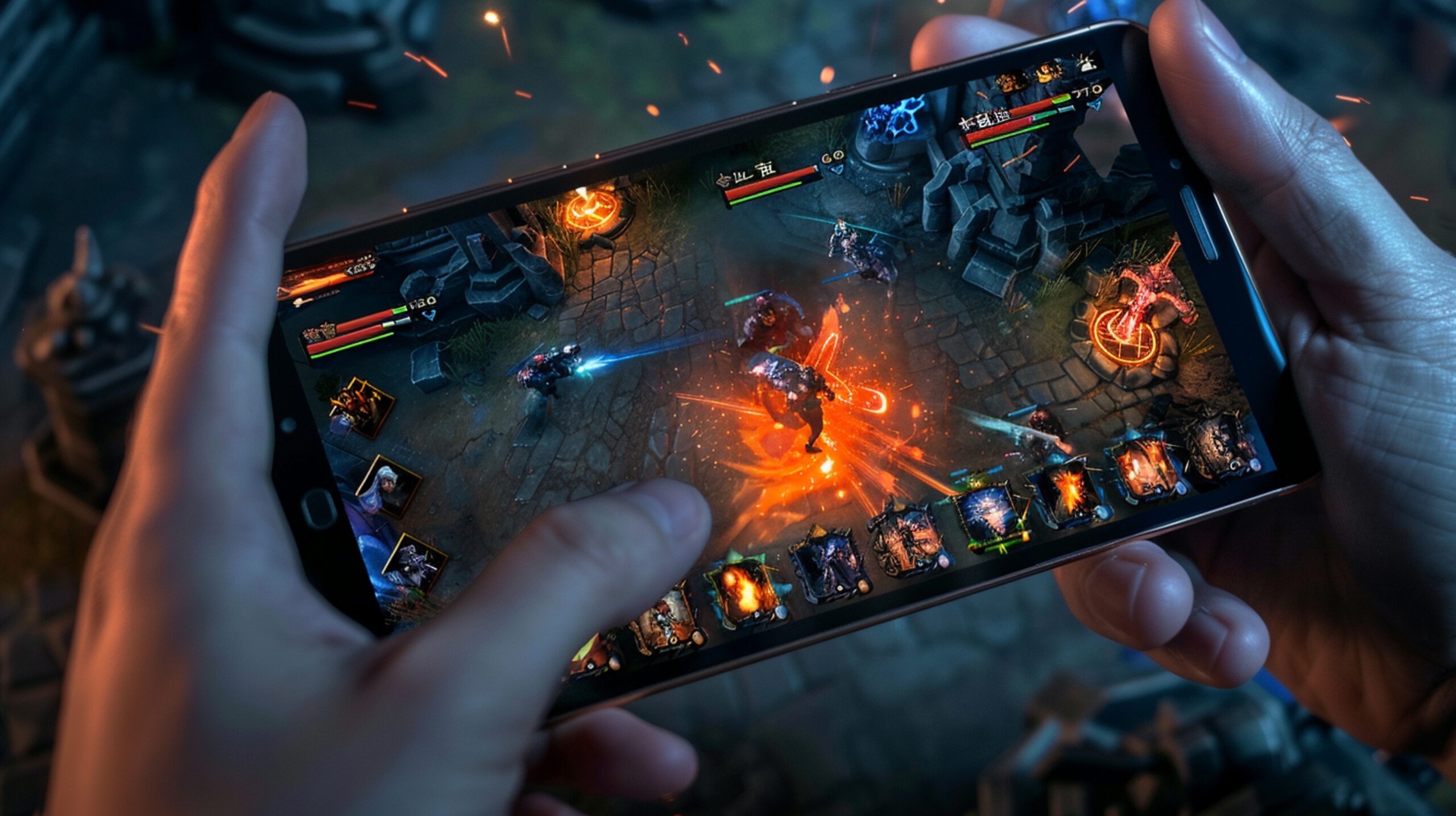



Key Highlights
- Mobile gaming has become the largest gaming platform by global audience.
- Affordable smartphones and internet access continue to expand the player base.
- Grand View Research projects the global mobile gaming market to surpass USD 256.19 billion by 2030.
- Mobile esports is attracting larger audiences and bigger investments.
- AI, 5G, and cloud are improving mobile gaming experiences.
- Developers are increasingly adopting mobile-first strategies.
A decade ago, mobile gaming meant a quick round of Snake or Tetris while waiting for a bus. Today, it is the single biggest force in the global gaming industry, ahead of consoles and PCs combined. Smartphones have quietly turned into the world’s most widely used gaming device, reaching more people than any other platform in history.
Better phones, cheaper data, and app stores packed with choices have removed almost every barrier that once stood between a person and a game. No expensive setup, no physical discs, no waiting in line at a store. Just a tap, and you’re playing.
Grand View Research projects the global mobile gaming market will cross USD 256.19 billion by 2030.
What’s really changed is not just where people play, but who plays, how often, and why they keep coming back. That story is only getting bigger.
In this article
Mobile Gaming Becoming World’s Biggest Gaming Platform
7 Reasons Mobile Gaming Is Winning the Platform War
Cloud, 5G, and AI: Technology Transforming Mobile Gaming
What Is Mobile Esports and Why Is It Growing So Fast?
Mobile Gaming Becoming World’s Biggest Gaming Platform
Gamers used to argue over consoles versus PCs, as if mobile did not belong in the conversation. That debate is over. Mobile gaming now outpaces both of them combined, and it did so without flashy hardware or massive budgets. It won on reach. Billions of people already carried a capable gaming device in their pocket, so the industry simply met them where they were.
When the only requirement to play is owning a phone, gaming stops being a niche interest and becomes something almost anyone can do. There is no costly setup, no steep learning curve, no invitation-only club. Mobile opened the door, and an entire generation walked through it without ever needing the label “gamer” to enjoy the games.
Markets like India, Brazil, and Southeast Asia are leading this shift. Affordable smartphones, low-cost data, and games tailored to local tastes have driven downloads and engagement to record highs. Studios are now designing titles mobile-first from day one, and investors are following the momentum.
7 Reasons Mobile Gaming Is Winning the Platform War
Mobile gaming is no longer the “lighter” version of console or PC gaming; it is setting the pace for the entire industry. A few reasons stand out:
- Easy to start: Anyone with a smartphone can play. No consoles, no controllers, no extra spending; just download and go.
- Free-to-play, done right: Titles like PUBG Mobile, Free Fire, and Call of Duty: Mobile offer console-level polish at no upfront cost, making the freemium model the industry’s biggest revenue driver in 2026.
- Faster updates: Shorter build cycles let mobile games respond to trends and player feedback almost in real time, something traditional releases struggle to match.
- 5G and cloud streaming: Services like Xbox Cloud Gaming and NVIDIA GeForce NOW now stream heavyweight titles straight to phones over low-latency 5G, sidestepping hardware limits entirely.
- Play with anyone, anywhere: Cross-platform support lets mobile players team up with friends on console or PC, erasing old platform walls.
- Built for real life: Short sessions fit naturally into commutes, breaks, and downtime; no other platform matches that convenience.
- Genuinely new gameplay: Touch, tilt, haptics, and AR are enabling experiences that simply cannot exist on consoles or PCs.
Cloud, 5G, and AI: Technology Transforming Mobile Gaming
The phone in your pocket right now likely outperforms the gaming PC most people owned five years back. That is not an exaggeration; it is just how fast mobile chips, AI-assisted graphics, and smarter thermal management have advanced. Pair that with 5G, and lag stops being an excuse.
Cloud gaming has knocked down the last real barrier. You no longer need a pricey console to play a AAA title. Fortnite, Resident Evil, and Call of Duty already stream directly to phones, no downloads or compromises required. NVIDIA and Microsoft are no longer testing mobile cloud gaming; they are betting the future on it. Big action RPG launches such as Arknights: Endfield show just how console-grade mobile experiences have become, pulling in massive install numbers within weeks of launch.
Then there is AI, quietly making every session feel personal. Pokémon GO turned neighborhoods into playgrounds; today’s strategy games adjust to how a player thinks, not just how they tap. By 2027, roughly one in three developers builds with generative AI baked into the pipeline, creating richer, more responsive game worlds with smaller teams. AI is no longer a side feature; it is driving mobile gaming forward.
What Is Mobile Esports and Why Is It Growing So Fast?
Esports once meant niche LAN tournaments in dim arenas. Now it is a global spectacle, and mobile is its fastest-growing segment. FIFA 26, Free Fire, PUBG Mobile, and Call of Duty: Mobile headline competitive play, drawing in hundreds of millions of viewers and players.
Accessibility is the reason. A phone and a data connection are all it takes to enter a tournament, stream a match, or watch top-tier competition live. Platforms like Twitch, YouTube Gaming, and TikTok continue to expand their audiences. The Esports World Cup 2026 carries a record $75 million prize pool, a clear sign the industry now treats mobile competition as a serious business, not a sideshow.
In-game chat, live co-op events, and community challenges are now standard features, not bonuses. For Gen Z and Gen Alpha, gaming has quietly become a primary way to socialize, compete, and connect.
Why Tech Giants Are Betting Billions on Mobile Gaming
Mobile gaming is not just attracting players; it is attracting serious capital and long-term commitment from developers and platforms alike.
- Mobile-first studios lead the charge: Tencent, NetEase, and Supercell built blockbuster franchises designed for mobile from the start. Legacy publishers like Activision and EA are pouring far more resources into titles such as Call of Duty Mobile and Apex Legends Mobile.
- App stores as economic engines: The Apple App Store and Google Play generate billions annually through in-app purchases and ads, giving indie studios the same global reach as major publishers.
- AI, cloud, and 5G working together: Developers now use AI for personalization and behavior prediction, cloud gaming to cut hardware dependency, and 5G to enable faster, more complex real-time games.
- Franchises crossing over: Names like Final Fantasy, Mario, and Diablo are expanding into mobile, while mobile-native IPs are spinning off their own comics, animations, and web series.
The Road Ahead
Mobile gaming has stopped being a supporting act; it is the main event. It has erased the line between casual and hardcore play, brought in billions of new players, and reshaped how the entertainment industry makes money. Students, working professionals, people in small towns and big cities alike, anyone with a phone can be a gamer now.
As smartphones get more powerful, 5G matures, AI personalization deepens, and cloud gaming becomes routine rather than remarkable, mobile gaming’s place in everyday life will only grow.
Frequently Asked Questions – Mobile Gaming Market
How big is the mobile gaming market right now?
The global mobile gaming market is projected to cross USD 256.19 billion by 2030, driven by rising smartphone ownership, affordable data, and free-to-play models that make gaming accessible to nearly everyone.
Why has mobile gaming overtaken console and PC gaming?
Mobile gaming leads because it removes almost every barrier to entry; no expensive hardware, no learning curve, and games that fit into short, everyday moments like commutes or breaks. Add in cloud streaming and 5G, and mobile now matches the depth of console and PC titles.
What role does AI play in mobile gaming today?
AI powers personalization, adaptive difficulty, and smarter game worlds. By 2027, roughly one in three developers builds with generative AI as part of the pipeline, helping smaller teams create richer, more responsive games faster.
What is mobile esports, and why is it growing so fast?
Mobile esports is competitive gaming played entirely on smartphones, with titles like Free Fire, PUBG Mobile, and Call of Duty: Mobile leading the space. It’s growing fast because all a player needs is a phone and a data connection, no arena, no console, no barrier. The Esports World Cup 2026 alone carries a $75 million prize pool.
What does the future of mobile gaming look like?
Expect deeper AI personalization, wider cloud gaming adoption, and tighter cross-platform integration with console and PC. As 5G matures, mobile games will keep closing the gap with traditional gaming platforms rather than just competing alongside them.
Continue Reading: