

Key Highlights
- The digital advertising market is transforming live sports into premium advertising platforms.
- The FIFA World Cup 2026 has transformed hydration breaks into premium advertising inventory.
- IPL Strategic Timeouts have become one of the most successful sports advertising models.
- AI-powered OTT platforms are making sports advertising more personalized and measurable.
- Live sports remain one of the few media formats that consistently attract real-time audiences.
- According to Grand View Research, the global digital advertising market is projected to reach USD 1,692.9 billion by 2033.
In This Article
What is the Digital Advertising Market?
Why Is the Digital Advertising Market Transforming Sports Broadcasting?
How FIFA World Cup 2026 Turned Match Breaks into Advertising Opportunities
How the IPL Turned Strategic Timeouts into Advertising Gold
How the NFL and NBA Maximize Every Commercial Break
Why OTT Platforms Are Changing the Future of Sports Advertising
What Is the Digital Advertising Market?
The digital advertising market is the global ecosystem in which businesses promote products and services through digital channels such as search engines, websites, mobile applications, social media platforms, connected TV (CTV), streaming services, and online video. Unlike traditional advertising, digital campaigns use data, artificial intelligence (AI), and audience insights to deliver personalized advertisements to specific users.
In sports broadcasting, digital advertising extends beyond traditional television commercials. It includes AI-driven ad targeting, Dynamic Ad Insertion (DAI), sponsorship integrations, branded content, and personalized advertisements delivered through OTT platforms. As viewers increasingly consume live sports through streaming services, advertisers can reach audiences with highly relevant messages in real time.
According to Grand View Research, the digital advertising market is expected to reach USD 1,692.9 billion by 2033, reflecting growing investments in AI-powered advertising, programmatic buying, and audience analytics.
Why Is the Digital Advertising Market Transforming Sports Broadcasting?
Live sports have become one of the most valuable environments for advertisers because they attract millions of viewers simultaneously. Unlike on-demand entertainment, sporting events are watched in real time, making it difficult for audiences to skip commercials. This creates premium advertising opportunities during scheduled breaks without interrupting the overall viewing experience.
Broadcasters are increasingly monetizing natural pauses such as hydration breaks, strategic timeouts, quarter breaks, and replay reviews. These moments allow advertisers to reach highly engaged audiences while helping sports organizations generate additional revenue from media rights and sponsorships.
Several factors are driving this transformation:
- Live audiences deliver higher engagement than recorded content.
- AI enables personalized advertisements based on viewer preferences.
- OTT platforms support Dynamic Ad Insertion (DAI) for targeted campaigns.
- Brands can measure campaign performance using real-time analytics.
- Sports leagues maximize the commercial value of existing game interruptions.
How FIFA World Cup 2026 Turned Match Breaks into Advertising Opportunities
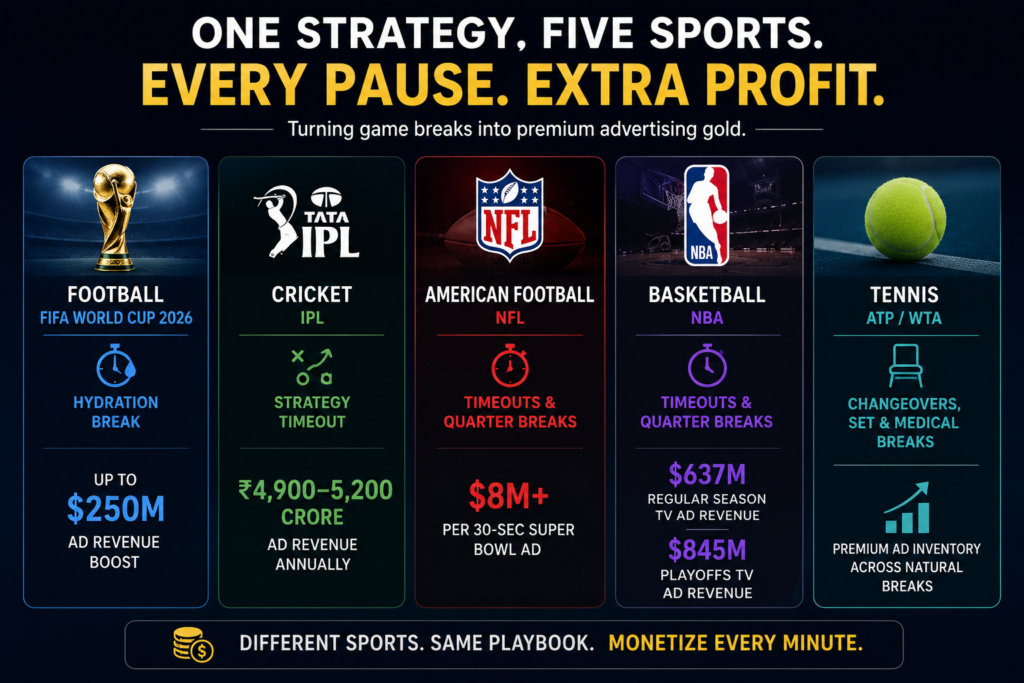
For decades, football provided broadcasters with only one guaranteed commercial window: halftime. The introduction of mandatory hydration breaks during the FIFA World Cup 2026 changes this model by creating additional advertising opportunities without changing the game’s competitive structure.
Each match includes two scheduled hydration breaks, allowing broadcasters to sell premium advertising inventory while ensuring player safety in hot weather conditions. This demonstrates how sports organizations are combining athlete welfare with commercial innovation.
FIFA’s Advertising Impact:
| Feature | Commercial Benefit |
| Hydration Breaks | Two additional advertising windows per match |
| Broadcasters | Increased advertising inventory |
| Brands | Higher audience engagement |
| Viewers | Minimal disruption to gameplay |
Industry estimates suggest that Fox Sports has generated significant additional advertising revenue from these breaks, highlighting the growing commercial value of live sports broadcasting.
Rather than extending the duration of matches, FIFA has optimized existing game pauses to increase broadcaster revenue this World Cup while preserving the overall fan experience. This approach could influence how other international sporting events monetize scheduled interruptions in the future.
How the IPL Turned Strategic Timeouts into Advertising Gold
The Indian Premier League (IPL) has demonstrated how a scheduled pause can become a valuable commercial asset. What was originally introduced as a tactical break has evolved into premium advertising inventory, allowing broadcasters, sponsors, and brands to maximize audience engagement without disrupting the excitement of the match.
Unlike traditional cricket broadcasts that relied primarily on innings breaks, Strategic Timeouts provide predictable advertising windows during live gameplay. These short intervals allow brands to deliver high-impact campaigns when viewer attention remains at its peak.
The IPL model demonstrates that carefully planned commercial breaks can increase broadcaster revenue while maintaining a positive viewing experience. This success has encouraged other sports organizations to explore similar monetization strategies. Indian Premier League advertising revenue remains around ₹4,900–5,200 crore per season, despite tighter advertising regulations in India.
How the NFL and NBA Maximize Every Commercial Break
The National Football League (NFL) has long been recognized as one of the world’s most commercially successful sports leagues. Timeouts, replay reviews, injuries, and scoring breaks provide multiple opportunities for advertisers to reach highly engaged audiences throughout a game.
Premium advertising during events such as the Super Bowl demonstrates the value of live sports audiences, where brands invest millions of dollars for just a few seconds of airtime because viewers actively watch rather than skip commercials.
The NBA has adopted a different strategy. Instead of increasing the number of commercial breaks, it focuses on increasing the value of every advertising opportunity. AI-powered sponsorships, virtual courtside branding, and personalized streaming advertisements allow the league to generate additional revenue across television and digital platforms.
This evolution highlights an important shift in the digital advertising market. Success is no longer measured only by the number of advertisements shown but by delivering relevant, data-driven experiences that improve engagement and campaign performance.
Why OTT Platforms Are Changing the Future of Sports Advertising
The rapid growth of Over-the-Top (OTT) streaming platforms has fundamentally changed how advertisers connect with sports audiences. Unlike traditional television, where every viewer watches the same commercial, OTT platforms can deliver personalized advertisements based on location, language, device type, viewing behavior, and audience interests.
Technologies such as Dynamic Ad Insertion (DAI) and artificial intelligence enable broadcasters to replace a single commercial with different advertisements for different viewers watching the same live event. This improves campaign relevance while maximizing advertising revenue.
Traditional TV vs OTT Advertising
| Traditional Television | OTT & AI Advertising |
| Same advertisement for everyone | Personalized advertisements |
| Fixed advertising schedule | Dynamic Ad Insertion (DAI) |
| Limited audience insights | Real-time audience analytics |
| Broad targeting | Individual audience targeting |
As streaming continues to expand globally, broadcasters are expected to invest more heavily in AI-driven advertising technologies that increase return on investment while improving viewer experiences.
Sports Advertising Models Compared
Different sports have developed unique strategies to monetize audience attention. While the approach varies by format, the objective remains the same, i.e., to maximize advertising revenue without compromising the fan experience through sports technology.
| Sports League | Advertising Opportunity | Business Impact |
| FIFA World Cup | Hydration Breaks | Additional premium advertising inventory |
| IPL | Strategic Timeouts | High-value sponsorships and television advertising |
| NFL | Timeouts & Replay Reviews | Premium commercial inventory |
| NBA | Quarter Breaks & AI Sponsorships | Enhanced digital advertising revenue |
The success of these models demonstrates that modern sports broadcasting is increasingly driven by data, technology, and strategic commercial planning rather than traditional advertising alone.
Expert Insight
The future of sports advertising will not depend on showing more advertisements, but on delivering smarter advertisements. Artificial intelligence, first-party data, and audience analytics are enabling broadcasters to personalize every commercial experience while improving campaign effectiveness. Sports organizations that successfully balance fan engagement with commercial innovation will strengthen media rights, attract premium sponsorships, and create sustainable long-term revenue opportunities.
Future Outlook: The Next Phase of the Digital Advertising Market
The future of the digital advertising market will be driven by artificial intelligence, automation, and first-party audience data. Sports organizations are increasingly viewing scheduled game breaks as strategic commercial assets rather than interruptions.
Future sporting events are expected to integrate AI-powered audience analytics, programmatic advertising, interactive sponsorships, and personalized streaming experiences. These innovations will allow broadcasters to increase advertising revenue while delivering more relevant experiences for viewers.
As competition for audience attention continues to intensify, live sports will remain one of the most valuable environments for advertisers because they combine real-time engagement with measurable campaign performance.
Frequently Asked Questions – Digital Advertising Market
What Is The Digital Advertising Market?
The digital advertising market encompasses all online advertising activities across search engines, websites, social media, mobile applications, connected TV, and streaming platforms, leveraging technologies such as AI, data analytics, and programmatic advertising.
Why Are Sports Important For Digital Advertising?
Live sports attract large real-time audiences that actively watch broadcasts, making commercial breaks highly valuable for advertisers seeking maximum engagement.
What Is Dynamic Ad Insertion (DAI)
Dynamic Ad Insertion is a technology that allows broadcasters to insert personalized advertisements into live video streams based on viewer characteristics such as location, language, and interests.
How Do OTT Platforms Improve Advertising?
OTT platforms use AI and audience analytics to deliver personalized advertisements, improving campaign performance while increasing advertising revenue for broadcasters.
Why Are Live Sports Important For Advertisers?
Live sports attract highly engaged audiences who watch events in real time, making commercial breaks significantly more effective than advertisements shown during on-demand content.
Continue Reading: