



Samsonite leads UK suitcase brand awareness at 44%, 78% of UK consumers are brand-conscious, and nearly all suitcase purchases are planned. Here is what the data reveals about how UK travelers choose, buy, and stay loyal to their luggage.
The modern UK traveler no longer carries a suitcase; they make a statement with one. What was once pulled out of storage a couple of times a year has evolved into something far more intentional. Today’s suitcase can track its location, charge devices mid-journey, and reflect a traveler’s personal aesthetic through carefully chosen designs. Enter the “smart traveler,” a new generation of UK suitcase and travel bag consumers who pack efficiently, plan ahead, and expect their luggage to perform as actively as they do.
According to Grand View Research’s consumer insights, the UK suitcase and travel bag demand is at a clear inflection point. Sustainability, smart technology, and more deliberate purchasing behaviors are reshaping consumer expectations and redefining what brands need to deliver. These insights highlight what the data reveals and what it means for brands competing in this evolving landscape.
Key Four Trends Reshaping the UK Travel Bags Market
Four macro trends are steadily transforming the UK suitcase and travel bag category:
1. Sustainability Has Become the Baseline
Materials such as recycled plastics, vegan leather, and repair-focused programs have shifted from niche offerings to standard expectations. UK consumers increasingly align luggage purchases with their environmental values, and brands without credible sustainability efforts risk losing both relevance and consideration.
2. Smart Technology Is Expanding Luggage Capabilities
Features like GPS tracking, biometric locks, and AI-assisted packing are redefining luggage as more than just a storage solution. Smart luggage is experiencing strong double-digit growth, particularly among Millennials and frequent business travelers.
3. Personalization Goes Beyond Monograms
Consumers in the UK are seeking luggage that reflects identity, not just utility. Personalization now includes color choices, hardware finishes, and customizable interiors. Brands leveraging data-driven personalization are seeing higher engagement, loyalty, and repeat purchases.
4. Compact and Convertible Designs Are Gaining Traction
With the rise of budget airlines and shorter, more frequent trips, compact and modular luggage has become a practical necessity. UK travelers prioritize flexibility and efficiency, expecting their bags to adapt to fast-moving, lightweight travel habits.
Do UK Travelers Use Their Bags Often?
Less frequently than expected, that insight fundamentally shifts how brands should approach this category.
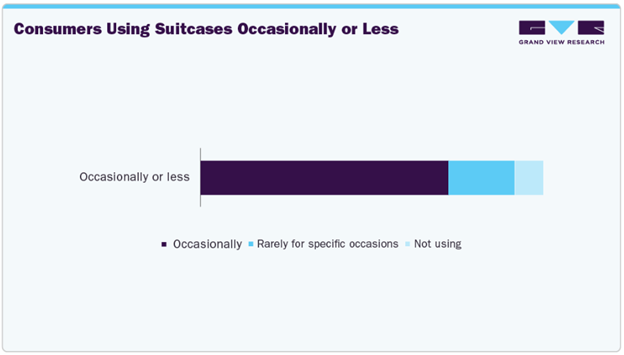
Suitcase usage in the UK is inherently occasional. Most consumers use their luggage only during specific moments such as holidays, weekend breaks, or business trips. Just 3% report using suitcases daily, while a notable 25% do not use them at all.
UK travelers typically reach for their suitcase during four key occasions:
• Casual outings and short holidays
• Seasonal wardrobe changes
• Special events such as weddings and formal gatherings
• Business and work-related travel
However, frequency of use is not the defining factor. The discerning UK traveler is not purchasing a suitcase for everyday convenience but for high-value moments. As a result, expectations around quality, durability, and long-term value are significantly higher than in everyday product categories.
Men tend to prioritize functionality and a polished, professional look, while women demonstrate a wider set of motivations, from replacing worn-out luggage to expressing personal style. Despite these differences, both segments share a common expectation. Brands must deliver on their promises or risk losing trust entirely.
Curious about what truly influences UK travelers’ preferences for suitcases and travel bags? Unlock the full consumer insights here.
What Triggers a UK Traveler to Finally Buy
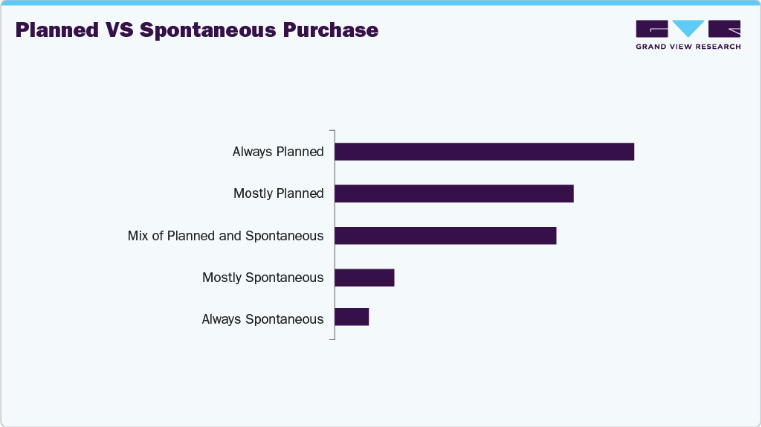
This remains one of the most considered purchase categories in the UK consumer market, and the data clearly reflects that. Suitcase purchases are largely planned, often aligned with upcoming travel needs or seasonal promotions. Given the higher price point and functional nature of the category, impulse buying is relatively limited.
Top Purchase Triggers
- Comfort, fit, and everyday functionality
- Seasonal sales and occasion-driven timing
- Online reviews and ratings from trusted sources
- Promotions and discounts, especially among the 78% of brand-conscious consumers
How Distant Generations Shop
• Gen Z and Millennials both prefer fashion e-commerce marketplaces as their primary purchase channel
• Gen Z shows a strong inclination toward brand websites, reflecting a need for authenticity and direct engagement
• Millennials continue to rely on department stores, valuing the ability to inspect products in person and trust established retail environments
Consumers typically purchase a suitcase once every two years, treating it as a long-term investment rather than a frequent buy. The biggest barriers to purchase remain the high cost associated with quality luggage and the limited availability of sustainable or ethically produced options at accessible price points.
Because purchases are so infrequent, brand visibility and credibility between buying cycles become just as important as the purchase moment itself. The data on buying behavior goes even deeper. Are you ready to explore it further?
The Brands UK Travelers Trust the Most
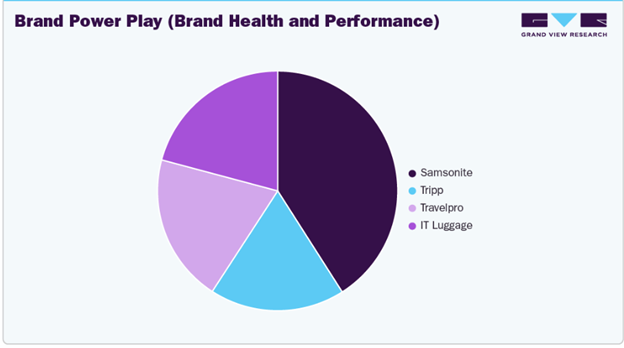
The UK suitcase and travel bag market is competitive yet relatively concentrated. Samsonite leads in brand awareness at 44%, supported by a long-standing reputation for durability, quality, and ease of use across multiple styles and price segments. IT Luggage, Tripp, and Travelpro follow closely, each establishing a distinct position within the market.
Where Legacy Brands Are Falling Short
High awareness no longer guarantees relevance. Many established luggage brands still rely on durability claims and heritage-led messaging, while the smart traveler has evolved beyond that narrative. Today’s UK consumer is asking more nuanced questions. Not just “will this last?” but also “is it sustainable, does it integrate with my devices, can it be personalized, and does the brand reflect my values?”
Brands that have not expanded their value proposition beyond quality and price are losing momentum at the consideration stage, even when brand awareness remains strong. The disconnect between what legacy brands communicate and what the modern traveler expects continues to grow, creating space for challenger brands to capture attention and loyalty.
The Smart Traveler Is No Longer Guessing. Is Your Brand Still Catching Up?
The UK suitcase and travel bag consumer is informed, intentional, and increasingly driven by values. They research thoroughly before making a purchase, align buying decisions with upcoming travel plans, and expect brands to deliver on quality, sustainability, and meaningful innovation.
The signals are clear and the expectations are rising. The only question is whether your brand is prepared for what lies ahead.
Every great journey begins with the right direction. Let data guide yours!