




Key Highlights
- China’s recovering urea output is limiting price gains.
- India’s import tenders contrast with cautious farm demand.
- Expensive sulphur and buyer resistance pressure MAP prices.
- European growers are delaying purchases amid affordability and weather concerns.
- Green ammonia agreements could strengthen long-term supply resilience.
In this article
Fertilizer Prices Reflect More Than Seasonal Demand
India’s Import Planning Does Not Tell the Whole Demand Story
Europe’s Buyers Weigh Affordability Against Delivery Risks
Fertilizer Prices Reflect More Than Seasonal Demand
Global fertilizer markets reflect competing forces: production recoveries increase availability, tenders create demand signals, and high feedstock costs may be difficult to pass on when buyers resist higher prices. Fertilizer pricing intelligence helps buyers distinguish temporary price movements from structural supply changes.
China’s Urea Recovery Meets Sluggish Buying
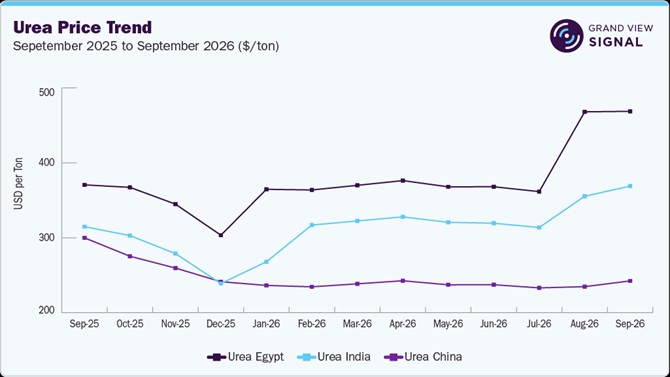
China’s urea market shows how additional supply can limit price increases. After seasonal maintenance, plants resumed operations and output returned to high levels, while autumn purchasing stayed subdued as summer top-dressing needs wound down and buyers avoided building inventories.
Earlier export commitments absorbed some supply, but once key shipment windows ended, production outpaced demand. Price recoveries struggled to gain momentum, pressuring higher-cost producers’ margins.
Buyers should read production data alongside export activity and inventories; higher output alone does not guarantee stronger prices.
Get Full Access to Price Trends & Market Drivers.
India’s Import Planning Does Not Tell the Whole Demand Story
India offers a different contrast. Government agencies issued substantial urea import tenders ahead of the Rabi season, creating an outlet for international suppliers and preparing supply buffers.
However, procurement planning is not immediate consumption. Weaker retail sales and localized rainfall deficits have encouraged cautious spending. Tenders indicate forward-looking supply management, not necessarily stronger daily fertilizer use.
Tender volumes should be assessed alongside retail sales, weather, and crop-season requirements.
Phosphate Producers Face a Cost-and-Affordability Squeeze
The phosphate market shows why high input costs cannot always support finished-product prices. U.S. monoammonium phosphate (MAP) prices fell around 6.9% month on month amid volatile, expensive raw sulphur.
Some input costs softened, but buyers held back. Compound fertilizer manufacturers drew down existing inventories rather than accept high finished-product prices, limiting cost pass-through and compressing margins.
Buyers should track raw-material costs alongside downstream purchasing capacity, inventory levels, and affordability.
Europe’s Buyers Weigh Affordability Against Delivery Risks
European growers face financial pressure, uncertain weather, and seasonal logistics. Extended dry spells in Western Europe have complicated crop and nutrient planning, prompting many farms to delay purchases to preserve cash flow.
But delayed orders may concentrate demand in the spring application window, straining handling, storage, and transport. France has extended nitrogen assistance schemes, yet cautious buying persists.
Staggered purchasing and early logistics planning can reduce exposure to last-minute constraints.
Green Ammonia Signals a Longer-Term Shift
Alongside short-term market pressures, India has facilitated landmark green ammonia agreements under the National Green Hydrogen Mission. The arrangements involve 10-year, fixed-price supply contracts intended to help shift domestic fertilizer manufacturing away from fossil-fuel-based grey ammonia toward ammonia produced using renewable energy.
These contracts link decarbonization with supply planning and may improve input-cost visibility, although they cannot remove every market risk.
Countries are also diversifying sourcing routes, while planned integrated Middle Eastern ammonia and urea facilities aim to add export capacity. The sector operates on two timelines: seasonal tenders meet immediate needs, while clean-energy agreements and infrastructure projects target future supply.
Turning Market Signals Into Better Decisions
China’s output recovery, India’s import planning, MAP costs, European affordability, and green ammonia investment each reveal part of the supply-demand picture.
Grand View Signal helps businesses monitor more than 200 global commodities through real-time price intelligence, regional coverage, up to 10 years of historical pricing data, market-driver analysis, and scenario forecasting. This context can help procurement teams evaluate sourcing options and prepare for potential disruptions.
As fertilizer markets evolve, informed decisions depend on understanding both immediate price signals and the structural changes shaping future supply.
Frequently Asked Questions
1. What is driving fertilizer price volatility?
Production changes, seasonal demand, feedstock costs, weather, logistics, and international trade decisions all influence fertilizer prices.
2. Why is China’s urea production recovery important?
Higher output alongside subdued buying can increase availability and limit price gains, putting pressure on higher-cost producers.
3. Do India’s urea import tenders mean farm demand is rising?
Not necessarily. Tenders support forward-looking supply planning, while retail sales and actual farm consumption may remain cautious.
4. Why are MAP prices under pressure?
Expensive sulphur feedstock has squeezed producer margins, but buyer resistance and inventory drawdowns have limited cost pass-through.
5. How could green ammonia affect fertilizer supply?
Long-term green ammonia contracts may improve supply and cost visibility while supporting the transition toward lower-carbon fertilizer manufacturing.