



- AI analyzes real-time sensor data to identify equipment failures before they cause expensive operational downtime.
- Smart algorithms optimize product placement based on consumer demand to reduce picking times significantly.
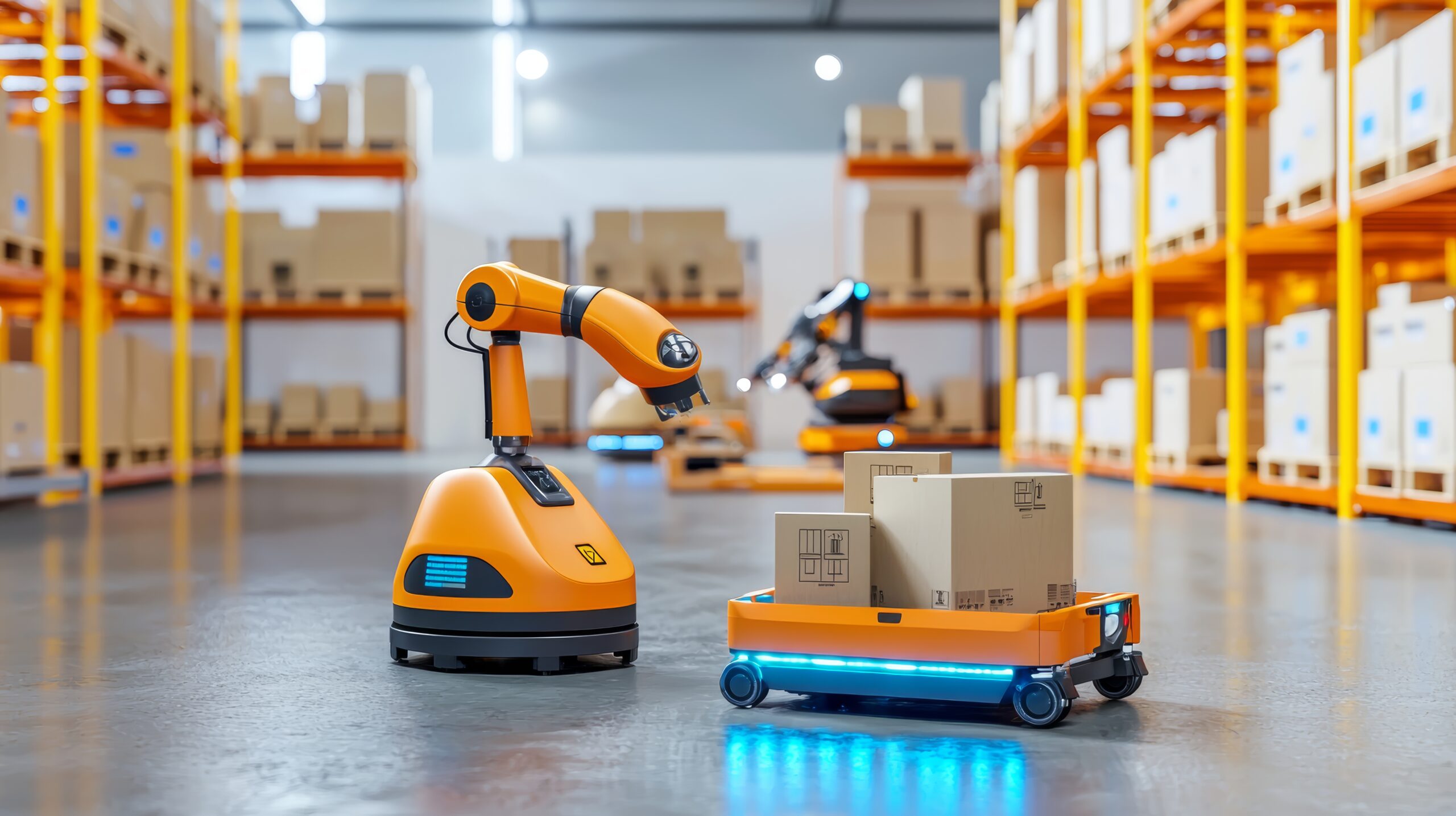
- Advanced autonomous mobile robots navigate complex floors safely while empowering staff to manage high-level tasks.
Imagine walking into a warehouse where the lights are dim until a sensor detects movement, robots glide silently between aisles without human intervention, and the inventory seems to manage itself. It sounds similar to a scene from a science fiction flick, right? But here in 2026, this is becoming the standard for modern logistics. With the AI in warehousing management market projected to reach $ 45.12 billion by 2030, it is clear that ‘smart warehousing’ is not just a buzzword anymore. It is a massive shift in how we move, store, and track everything from sneakers to surgical equipment.
If you are looking to upgrade your facility from a chaotic maze of boxes to a streamlined, AI-powered hub, you are in the right place. Let us break down how to build a smart warehouse without losing your mind or your entire budget in the process.
Why AI Over Humans
We have all been there: a manual inventory count that takes three days and is still 5% off, or a picker who gets stuck in a ‘bottleneck’ because the warehouse layout has not been updated since 2012. AI does not get tired, it does not need coffee breaks, and most importantly, it loves patterns.
By integrating AI, you are not just replacing people; you are giving them superpowers. AI handles the repetitive, data-heavy ‘grunt work,’ allowing your team to focus on high-level problem solving. It is about working smarter, not harder.
Step 1: Lay the Foundation with Data
You cannot build a smart warehouse on ‘dumb’ data. Before you go out and buy a fleet of robots, you need to ensure your current data is clean and accessible. Think of AI as an engine; it needs high-quality fuel (data) to run.
Audit Your Systems: Is your current Warehouse Management System (WMS) capable of talking to other software?
IoT Sensors: Start small by installing IoT sensors. These little gadgets can track temperature, humidity, and even the vibration of your conveyor belts. This data is what the AI will eventually use to make decisions.
Step 2: Predictive Maintenance (The Anti-Headache Tool)
One of the coolest ways AI is changing the game is through predictive maintenance. In the old days, you would wait for a forklift to break down before fixing it. Now, AI can analyze sensor data to tell you that motor on Belt 4 is going to fail in three days and is supposed to be fixed now.
This shift from reactive to proactive saves thousands in unplanned downtime. Plus, it keeps your equipment running longer, which makes your CFO happy.
Step 3: Master the Art of Dynamic Slotting
‘Slotting’ is basically deciding where things live in your warehouse. Usually, it is a manual process done once a quarter. But in a smart warehouse, AI handles dynamic slotting.
If the AI notices that customers are suddenly buying a specific brand of energy drink alongside yoga mats, it will suggest moving those two items closer to each other near the packing station. By continuously optimizing where products are stored based on real-time demand, you can slash pick times by 20% or more.
Step 4: Meet Your New Coworkers (Robotics & AMRs)
When people think of AI, they usually think of robots. And while you do not need a humanoid robot to be ‘smart,’ Autonomous Mobile Robots (AMRs) are a total game-changer.
Unlike traditional AGVs (Automated Guided Vehicles) that need magnetic strips on the floor to follow, AMRs use AI and LiDAR to navigate. They can see a fallen box or a human worker and navigate around them. They are great for ‘goods-to-person’ picking, where the robot brings the shelf to the human, rather than the human walking five miles a day.
Step 5: Computer Vision for Quality Control
Have you ever sent out an order with the wrong item inside? It is a costly mistake. AI-powered computer vision uses high-speed cameras to scan items as they pass on a conveyor. The AI can verify the SKU, check for damage, and even ensure the label is perfectly straight. It does all of this in a fraction of a second. It is like having a supervisor with x-ray vision and a photographic memory watching every single package.
The Human Side of Smart Warehouses
Building a smart warehouse is not just about the tech; it is about the people. Change can be scary, and your team might worry that the robots are taking our jobs.
The key to a successful AI rollout is transparency and training. Show your team how the AI makes their jobs easier. Instead of walking through freezing cold-storage aisles, they are now ‘Robot Fleet Managers’ or ‘Data Analysts.’ Upskilling your workforce ensures that as your warehouse gets smarter, your team does too.
Wrapping Up: Start Small, Scale Fast
Building a smart warehouse does not have to happen overnight. You do not need to spend $50 million on Day 1. Most successful companies start with a single use case. Perhaps it is AI-driven demand forecasting or automated cycle counting. They then scale up once they see the return on investment. The future of logistics is intelligent, adaptable, and incredibly fast. By embracing AI today, you are not just keeping up with the competition; you are setting the pace.