



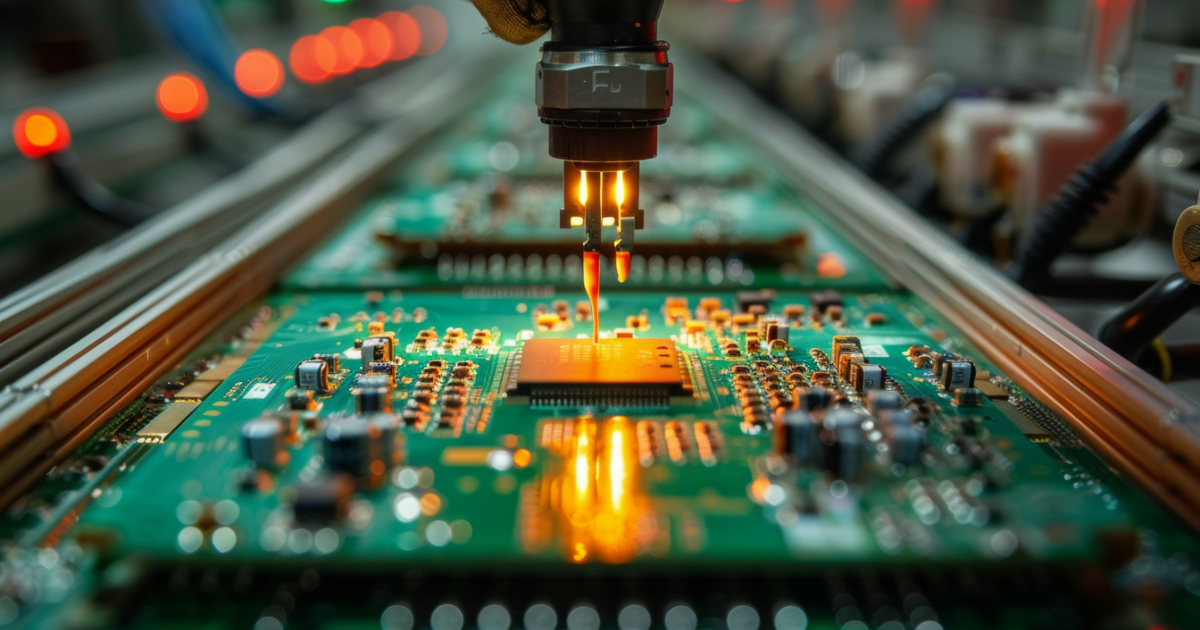
In what is being described as one of the most ambitious industrial announcements in recent years, Tesla, SpaceX, and xAI have reportedly joined forces to launch “Terafab,” a next-generation semiconductor manufacturing project aimed at producing advanced AI chips, potentially at a scale never seen before. The initiative, unveiled during a recent presentation in Texas on March 21, 2026, is reportedly designed to address what Elon Musk described as a looming global shortage of AI chips. “We either build the Terafab or we don’t have the chips,” Musk said, suggesting that existing supply chains are insufficient for the companies’ future needs.
Why Terafab Was Proposed
The rationale behind Terafab appears rooted in a growing mismatch between global chip supply and future demand. Elon Musk reportedly stated that existing semiconductor production would meet only a fraction of the requirements for Tesla’s autonomous vehicles, humanoid robots, and AI systems.
Industry estimates suggest that Musk-led companies could require 100–200 billion AI chips annually, driven by scaling needs in Robotaxi fleets, AI training clusters, and robotics. Terafab, therefore, is not merely an expansion effort but a strategic attempt to internalize chip production and eliminate dependence on external suppliers like TSMC and Samsung Electronics.
Projected Output: From Gigafab to “Terascale”
The scale of Terafab is reportedly what sets it apart. Initial production is expected to begin at around 100,000 wafer starts per month, comparable to leading-edge fabs today. However, the long-term ambition is far more aggressive:
- Scaling to 1 million wafers per month
- Producing 100–200 billion chips annually
- Delivering up to 1 terawatt of compute capacity per year
To contextualize, current global advanced chip manufacturing (5nm and below) is concentrated among a handful of players, with total output significantly below what Terafab aims to achieve individually.
The 2nm Advantage for AI, FSD, and Optimus
Terafab is expected to focus on 2nm chip technology, which offers higher transistor density, faster processing speeds, and lower power consumption.
For Tesla’s Tesla Full Self-Driving (FSD), these chips could reportedly enable faster real-time inference, improved safety, and more scalable Robotaxi deployment.
For Optimus, 2nm chips may allow better edge computing, longer battery life, and more precise physical interaction—key requirements for real-world robotics.
Meanwhile, xAI is expected to leverage these chips for large-scale AI model training, reducing reliance on third-party GPU providers.
The Space Data Center Vision
A distinctive element of the Terafab strategy is its link to space-based computing. One of the two fabs is reportedly being designed to produce chips specifically for orbital AI data centers operated by SpaceX. These space-based data centers, powered by continuous solar energy, could theoretically overcome Earth-based limitations such as power constraints and cooling inefficiencies. Musk has reportedly suggested that a significant portion of Terafab’s compute output, potentially up to a terawatt annually, could be deployed in orbit, forming a distributed AI infrastructure in space.
Implications for TSMC and Samsung
The emergence of Terafab could introduce competitive pressure on TSMC and Samsung Electronics, both of which dominate advanced chip manufacturing today. However, analysts caution that semiconductor fabrication remains highly complex, requiring years of expertise and massive capital investment. While Terafab’s ambitions are significant, matching the efficiency and yield of established foundries may take time.
A High-Stakes Bet on the Future
Terafab is widely seen as a high-risk, high-reward initiative. While it promises unprecedented scale and integration, it also faces challenges ranging from technological complexity to financial feasibility. Still, if even a portion of its reported targets are achieved, Terafab could fundamentally reshape how chips are produced, and who controls the future of AI. For now, the project remains in its early stages.
But as demand for compute continues to surge, Terafab may well represent the industry’s most radical attempt yet to bridge the gap between ambition and capability.