


Key Highlights
- Blank sailings tightened vessel availability ahead of seasonal cargo peaks.
- Selective Suez returns changed transit times and fleet capacity.
- Asian typhoons disrupted port connections and container equipment flows.
- Low Rhine water levels increased European inland transport costs.
- Regional cargo concentration created divergent dry-bulk freight conditions.
In this article
Why Freight Costs Remain a Moving Target
Five Drivers Reshaping Global Freight Supply Chains
Why Freight Costs Remain a Moving Target
Global freight markets remain fragmented. Asia–Europe container prices softened toward the end of the latest reporting period, while transpacific rates held firm. Dry-bulk coal freight recorded average month-on-month increases exceeding 12% across top geographies.
These differences show why a single ocean rate cannot explain total logistics costs. Vessel availability, route selection, weather, inland transport, and cargo concentration all influence what shippers ultimately pay. Freight pricing intelligence helps businesses connect these factors when planning bookings and negotiating contracts.
Five Drivers Reshaping Global Freight Supply Chains
1. Blank Sailings Tighten Container Capacity
Ahead of China’s early-October Golden Week, factories sought to dispatch cargo before the holiday. Carriers responded by announcing blank sailings across major Asia–Europe and transpacific routes, removing scheduled departures when shippers were preparing to move goods.
Cancelled voyages concentrated pre-holiday cargo onto fewer vessels. As a result, headline spot quotations could remain flat or edge lower even as loading flexibility deteriorated. For time-sensitive shipments, missing a sailing or waiting for the next departure can create costs that outweigh a modest reduction in the base freight rate.
Shippers therefore need to assess schedule availability and delivery requirements alongside quoted prices.
2. Selective Suez Canal Returns Change Voyage Economics
Some ocean services began returning to the Suez Canal in Egypt rather than continuing on longer Cape of Good Hope diversions. The shorter Asia–Europe route reduces transit time, vessel-days per rotation, and bunker fuel consumption. Over time, this can release capacity back into the fleet and improve vessel productivity.
However, the returns were limited to particular carriers and service loops. Shippers consequently faced different transit times and cost structures depending on the shipping line. Security concerns also remain important: renewed disruption could force diversions and absorb capacity again.
3. Asian Typhoons Disrupt Port and Equipment Flows
Severe weather across East Asia affected containerized and breakbulk operations. Even as port throughput and vessel traffic gradually recovered toward the end of October, earlier delays continued to affect schedules.
When delayed vessels arrive together, terminals can face berth congestion and missed feeder connections. Empty 20-foot and 40-foot containers may also take longer to return to export hubs. This equipment imbalance reduces booking flexibility and can increase demurrage and storage exposure.
A port reopening is therefore not the same as a fully recovered shipping network. Importers and exporters need to consider the downstream effects of disruption, not only the immediate weather event.
4. Rhine River Constraints Raise European Inland Costs
Low water levels along Germany’s Rhine River restricted barge capacity. Vessels had to carry lighter loads to avoid grounding, meaning more movements were required to transport the same cargo volume. Some shippers turned to road and rail alternatives, adding pressure to inland logistics.
Consequently, ocean quotations into gateways such as Rotterdam and Hamburg could soften while total landed transport costs increased. Inland surcharges, delayed collections, and port storage fees affected importers, particularly those moving bulk commodities and heavy industrial inputs.
Flexible inland delivery options and localized inventory buffers can help businesses respond to these constraints.
5. Cargo Concentration Creates Dry-Bulk Price Divergence
Dry-bulk freight depends on cargo demand and vessel positioning rather than fixed liner schedules. During the reporting period, larger Capesize and Panamax vessels benefited from stronger Atlantic conditions, tighter ship availability, and increased cargo inquiries.
Pacific conditions were more variable. Iron ore freight from Australia lost momentum later in the month, while coal demand fluctuated across Australian and Indonesian loading ports. European scrap shipments provided localized support for smaller Supramax vessels serving the Mediterranean.
A vessel positioned near a loading port has different voyage economics from one that must travel a long distance in ballast. For charterers, matching vessel availability to the precise loading window remains central to controlling voyage costs.
Turning Freight Market Signals into Procurement Decisions
These five drivers demonstrate why freight procurement should extend beyond the headline ocean quotation. Buyers should compare sailing schedules, route options, port conditions, inland charges, and vessel positioning when assessing total transport costs.
Grand View Signal’s Freight Monthly Pricing Intelligence Report provides market visibility across container routes, breakbulk, dry bulk, energy, and raw materials. Its coverage includes more than 200 commodity and freight trackers, over 10 years of historical pricing data, 20-foot and 40-foot container indices, fuel surcharges, and port-to-port bulk freight rates.
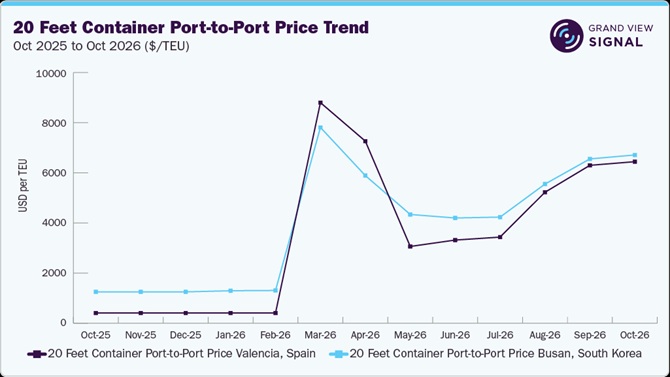
Get Full Access to Price Trends & Market Drivers.
Scenario and geopolitical impact modeling can help users assess how route diversions, trade policy changes, and congestion may affect ocean and inland costs. Customized dashboards and trade-lane analysis also support comparisons of regional rate spreads and multimodal transport expenses.
For supply chain leaders, combining these indicators can strengthen carrier negotiations, spot-market decisions, and planning for freight cost exposure.
Frequently Asked Questions
1. What are the main drivers of global freight rate changes?
Vessel capacity, shipping routes, weather disruptions, inland transport constraints, and regional cargo demand all influence freight costs.
2. How do blank sailings affect shippers?
They reduce scheduled departures and can limit loading flexibility, concentrating cargo onto fewer vessels even when quoted rates appear stable.
3. Why can Suez Canal returns affect freight capacity?
Shorter voyages can reduce vessel-days per rotation and improve fleet productivity, potentially releasing capacity over time.
4. How did low Rhine River water levels affect logistics costs?
Reduced barge loading capacity increased the need for additional vessel movements and alternative road or rail transport, adding inland costs.
5. Why is dry-bulk freight pricing different from container pricing?
Dry-bulk costs are strongly influenced by cargo demand, vessel type, ship positioning, and loading windows rather than fixed liner schedules.