



Key Highlights
- Natural rubber prices are sensitive to weather, harvest cycles, and concentrated supply.
- Synthetic rubber costs respond to petrochemical feedstocks, especially butadiene and styrene.
- Freight, trade policies, and regional capacity shifts can widen price differences.
- Downstream buyers may limit price rallies by purchasing only for immediate production.
- Pricing intelligence supports benchmarking, contract planning, and resilient sourcing.
In this article
Why Rubber Pricing Requires a Broader Market View
Natural Rubber Prices Start With Supply Conditions
Synthetic Rubber Follows the Petrochemical Cost Chain
Freight, Trade, and Manufacturing Hubs Matter
Four Ways to Strengthen Rubber Procurement
Why Rubber Pricing Requires a Broader Market View
Rubber is essential to tire manufacturing, automotive components, belts, seals, and hoses. Natural rubber depends on agricultural conditions, while synthetic rubber is linked to petrochemical feedstocks and energy costs. Freight, trade policies, inventories, and buyer behavior add complexity.
For procurement leaders, rubber pricing intelligence connects these signals and puts price movements in the context of supply conditions and longer-term patterns.
Natural Rubber Prices Start With Supply Conditions
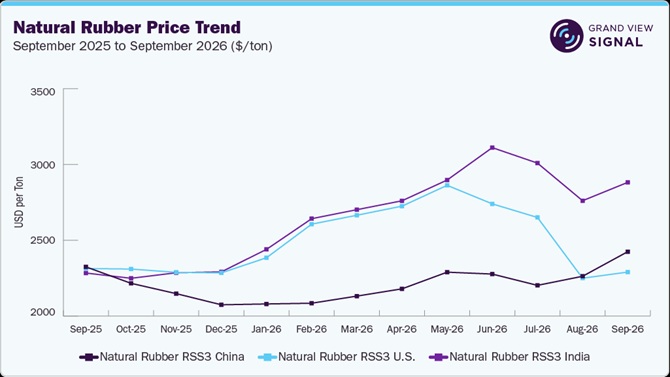
Natural rubber production is concentrated in Southeast Asia, including Thailand, Indonesia, Vietnam, and Malaysia, with India also contributing. Weather events, labor constraints, policy changes, or operational disruptions can affect international availability. Ribbed Smoked Sheet is an important benchmark grade for tracking price direction.
Get Full Access to Price Trends & Market Drivers.
Weather, Harvest Cycles, and Inventories
Heavy rainfall, flooding, and seasonal leaf-fall disease can interrupt tapping and reduce latex availability. When producing areas face disruption, buyers may compete for less material. Inventory trends provide another signal: drawdowns in major storage locations, including Qingdao, can support prices by reducing readily available stocks.
Tighter supply does not guarantee a prolonged rally. Tire manufacturers may resist higher costs when margins are under pressure, purchasing only enough rubber for immediate production instead of building inventories. This restraint can limit price momentum and bring prices back toward sustainable levels.
Synthetic Rubber Follows the Petrochemical Cost Chain
Polybutadiene rubber (PBR), styrene-butadiene rubber (SBR), and nitrile butadiene rubber (NBR) depend on chemical intermediates whose availability and cost shift with refinery conditions, steam cracker operations, energy prices, and plant maintenance.
One Feedstock Disruption Can Travel Downstream
PBR is closely connected to butadiene availability and is used in tire treads and conveyor belts. SBR relies on butadiene and styrene, making it sensitive to petrochemical conditions. NBR is used where resistance to oils, fuels, and industrial chemicals is needed, including seals, gaskets, and fuel hoses.
When a steam cracker undergoes maintenance or an unexpected outage, butadiene supply can tighten and raise synthetic rubber production costs. As facilities return to normal, constraints may ease. NBR also shows why buyers should monitor multiple inputs: higher butadiene costs may be partly offset by lower acrylonitrile prices. Tracking the feedstock basket offers more insight than following crude oil alone.
Freight, Trade, and Manufacturing Hubs Matter
Container rates, fuel surcharges, port congestion, import tariffs, and delivery timing can create regional price differences. Freight changes may alter landed costs even when commodity benchmarks remain stable. International buyers should therefore compare delivered costs, not just quoted material prices.
Long-term investment can also reshape demand. Tire manufacturing facilities in North Africa, including Egypt, may serve European and Middle Eastern markets, while automotive component activity in Tangier, Morocco, adds to regional demand for specialized rubber products. These shifts matter when reviewing suppliers, routes, and sourcing exposure.
Four Ways to Strengthen Rubber Procurement
1. Use Index-Linked Contracting
Fixed-price contracts offer predictability but may become less competitive when markets move. Spot buying provides flexibility but can expose buyers to sudden increases. Index-linked agreements tied to recognized monthly assessments create a clearer reference for negotiations and risk management.
2. Compare Natural and Synthetic Alternatives
Where technical specifications allow, monitor price differences between natural rubber and suitable synthetic grades. Substitution must also account for quality, durability, compliance, processing needs, and end-use performance.
3. Put Monthly Signals in Historical Context
Compare current prices with multi-year patterns, inventory movements, feedstock capacity, and seasonal conditions. This helps distinguish temporary disruptions from persistent shifts and reduces overreaction to short-lived spikes.
4. Evaluate Total Landed Cost and Supply Risk
Include freight, tariffs, lead times, supplier concentration, and availability in sourcing decisions. Multiple qualified suppliers and alternative routes can improve resilience, while scenario reviews help teams prepare for weather interruptions or petrochemical outages.
How Rubber Pricing Intelligence Supports Decisions
A consistent monitoring process connects agricultural conditions, feedstocks, inventories, trade flows, and downstream demand. Grand View Signal’s monthly rubber pricing intelligence can help teams benchmark prices and assess market movements in context. It helps make assumptions visible and purchasing decisions more disciplined.
Frequently Asked Questions
1. What factors influence global rubber prices?
Weather, harvest availability, inventories, feedstock costs, freight, trade policy, and industrial demand all influence prices.
2. How do natural and synthetic rubber prices differ?
Natural rubber responds more directly to agricultural conditions, while synthetic rubber is tied to petrochemical feedstocks and production capacity.
3. Why does butadiene matter to synthetic rubber?
Butadiene is a key input for PBR, SBR, and NBR, so supply disruptions can raise production costs.
4. How can procurement teams manage rubber price volatility?
Use index-linked contracts, monitor inventories and feedstocks, assess alternatives, and compare current prices with historical data.
5. What is rubber pricing intelligence?
It is the structured analysis of price assessments and market drivers to support benchmarking, purchasing, and supply risk decisions.