




Key Highlights
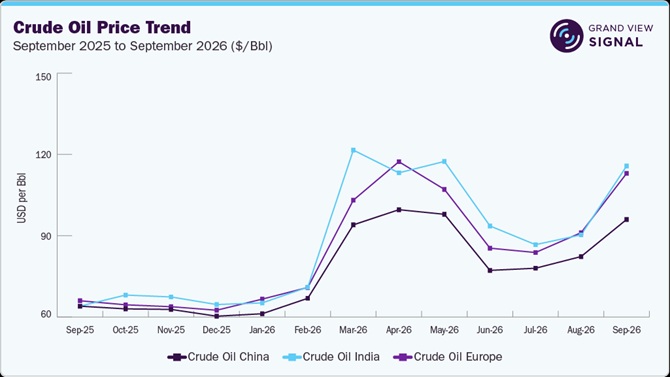
- Crude oil prices rose nearly 23% month over month across major consuming regions amid geopolitical and maritime risks.
- Europe’s below-average gas storage contrasts with surplus U.S. inventories.
- LNG delivery uncertainty is intensifying competition between European and Asian buyers.
- Coal and electricity prices are responding differently to inventory, weather, and regional supply conditions.
- Flexible sourcing, fuel buffers, and regional pricing intelligence can strengthen procurement planning.
In this article
Global Energy Markets Face a Complicated Risk Cycle
Natural Gas and LNG: A Regional Divide
Coal Markets Send Mixed Signals
Power Prices Reflect Fuel Stocks and Weather
Global Energy Markets Face a Complicated Risk Cycle
Global energy markets are navigating geopolitical instability, maritime disruptions, uneven inventories, and changing demand. Rather than following one uniform price trend, regional markets are reacting differently to supply constraints. For procurement teams, energy pricing intelligence is essential to understanding whether benchmark prices reflect actual local fuel availability and whether supplies can reach their destination on schedule.
Crude oil prices increased nearly 23% month over month across major consuming regions, reflecting infrastructure bottlenecks and transit risks. Although some shipments temporarily recovered, dependable supply remained linked to safe maritime access. OPEC+ nations held production quotas steady, while high prices encouraged some price-sensitive Asian buyers to reduce purchases.
Get Full Access to Price Trends & Market Drivers.
Why Physical Availability Matters
Price is only one part of procurement risk. Shipping interruptions, infrastructure constraints, and uncertain delivery schedules can influence both fuel costs and operational continuity. Buyers should assess benchmark movements alongside supply origins, route reliability, and delivery timelines.
Natural Gas and LNG: A Regional Divide
Natural gas markets illustrate how regional conditions can differ. European storage levels were below the historical seasonal average, leaving the region more exposed to supply shocks ahead of the winter demand cycle. Meanwhile, U.S. working gas inventories remained above the five-year average. Nevertheless, a localized pipeline outage triggered an immediate increase in gas futures, demonstrating that national inventory strength cannot eliminate local bottlenecks.
Europe and Asia are also competing for spot LNG cargoes. Periodic recovery in Qatar-linked vessel movements through the Strait of Hormuz has not removed uncertainty caused by delivery suspensions. When expected shipments are delayed, buyers may need replacement cargoes at a premium.
Storage Must Be Considered Alongside Delivery
Inventory provides a buffer, but it cannot fully offset transport interruptions or sudden demand changes. Buyers should monitor storage levels, pipeline availability, shipping activity, and replacement-cargo costs together. This is particularly important when winter preparedness depends on both sufficient fuel and reliable delivery.
Coal Markets Send Mixed Signals
Coal prices are diverging by product and region. In China, thermal steam coal and quasi first-grade coke prices strengthened, with coke rising by more than 5%. In contrast, spot assessments for main coking coal eased nearly 2%.
China allowed safety-compliant mines to exceed annual quotas, supporting domestic supply and easing some local pressure. Australian coking coal prices also cooled as Chinese import demand weakened.
These movements underline why coal should not be treated as a single market. Thermal coal serves power generation, while coking coal is linked to steelmaking. Procurement teams need to track product-specific demand, regional supply, and trade flows rather than relying on a broad coal-price indicator.
Power Prices Reflect Fuel Stocks and Weather
In India, thermal coal inventories held by power generators declined from more than 25 million tons to 19 million tons within weeks. Cooling demand helped push average spot electricity prices higher, highlighting the relationship between fuel availability and power-market exposure.
European wholesale electricity prices fluctuated with weather and fuel switching. High gas prices initially encouraged greater coal generation, but plant retirements limited switching options. Prices rose during periods of low wind output and high demand, then declined as wind generation recovered. Electricity buyers therefore need to monitor fuel costs, weather, renewable generation, and available capacity together.
Other energy markets also faced cost pressures. Saudi Arabia’s monthly propane contract benchmark rose to $625 per ton. Marine fuel availability improved slightly, but very-low-sulfur fuel oil (VLSFO) and marine gas oil (MGO) remained expensive because compliant low-sulfur blending components were constrained. Price spreads among Fujairah, Rotterdam, and Houston remained wide.
Practical Priorities for Energy Procurement Teams
Diversify Supply and Preserve Flexibility
Diversifying supply origins and retaining destination flexibility can reduce dependence on individual suppliers or routes. These options become particularly valuable when maritime access or regional infrastructure is uncertain.
Connect Inventory Planning With Delivery Risk
Utilities and industrial buyers should maintain appropriate primary-fuel buffers and evaluate local inventories against expected demand. A national supply surplus does not necessarily protect individual markets from pipeline outages, transport delays, or sudden inventory drawdowns.
Monitor Regional Signals
Tracking price differences, storage, shipping conditions, and local supply helps buyers distinguish temporary price spikes from persistent shortages. Grand View Signal provides commodity pricing intelligence and market-driver analysis to support regional comparisons, historical reviews, and scenario-based planning.
Frequently Asked Questions
1. What is driving energy price volatility?
Geopolitical instability, maritime transit risks, infrastructure bottlenecks, uneven inventories, and changing regional demand are contributing to price volatility.
2. Why is Europe exposed to natural gas supply risks?
European gas storage is below the historical seasonal average, increasing sensitivity to delivery interruptions and competition for LNG cargoes.
3. Why can U.S. gas futures rise despite high inventories?
A localized pipeline outage can constrain deliverability and raise futures prices even when national inventories remain above the five-year average.
4. Are thermal coal and coking coal prices moving together?
No. The reported conditions show stronger Chinese thermal coal and coke prices alongside lower main coking coal spot assessments.
5. How can energy buyers manage market uncertainty?
Buyers can diversify supply, maintain suitable fuel buffers, monitor regional prices and inventories, and assess shipping, weather, and infrastructure risks