



Key Points
- Farming is shifting from broad methods to hyper-specific actions, using AI and GPS.
- Driverless tractors have become pivotal in combating labor shortages.
- Precision planting and strategic spraying have gained traction.
- Bodies recommend integrating robotics into the weeding and harvesting processes.
- EU-funded Robotics 4 farmers deploys an autonomous robotic vehicle with an AI camera.
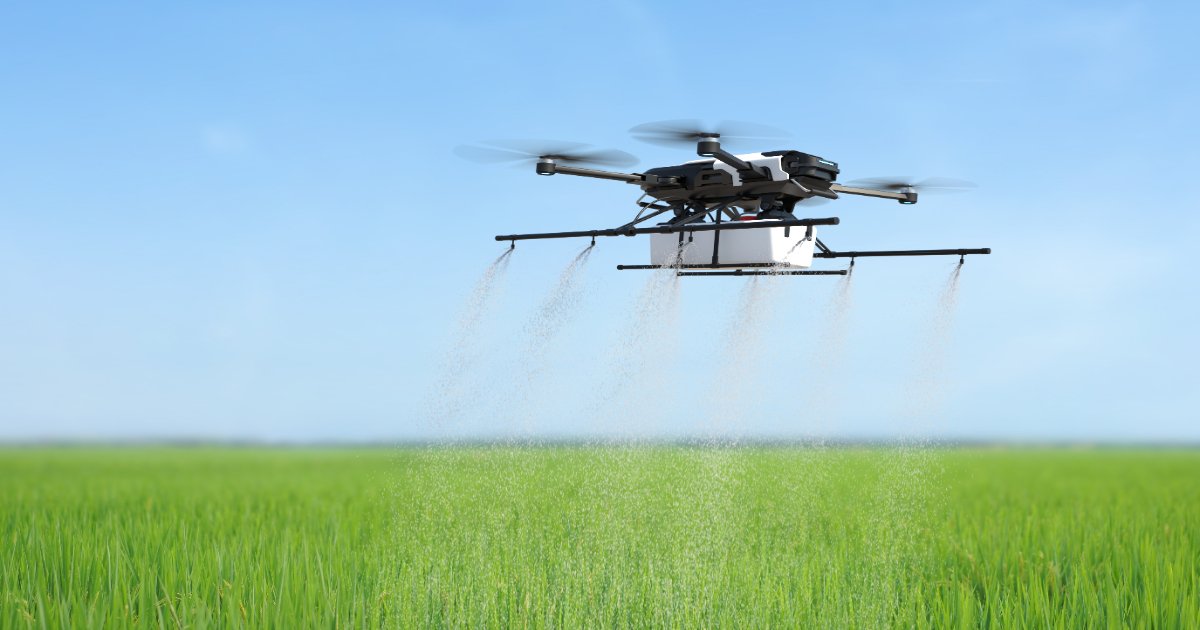
The modern field is no longer a silent expanse of earth and effort; it has become a sophisticated stage for a digital symphony. A symphony where autonomous tractors, agriculture drones, and seed planting robots are moving stakeholders, including farmers, toward a future of precision agriculture.
We stand at a pivotal precipice where the traditional tiller gives way to the tireless tool. The rise of autonomous farming is not merely a technical tweak to existing machinery; it is a fundamental reimagining of how humanity feeds itself. From the vast grain belts of North America to the emerging smart-acres in Africa, the shift toward self-governing systems is moving from a speculative ‘someday’ to a strategic ‘now.’
Echoing similar sentiments, an Africa Conference on Sustainable Agricultural Mechanization, organized by the Food and Agriculture Organization of the United Nations (FAO), has spoken highly of smart farming. In February 2026, the conference highlighted innovations such as autonomous feeding systems powered by sensors, GPS-guided drones, big data platforms, and artificial intelligence-supported advisory services to boost decision-making. These solutions can reduce losses, enhance productivity, create new jobs, and cut drudgery across Africa’s agrifood systems.
Labor Shortage Lingers
For decades, the agricultural sector has wrestled with a relentless trifecta: labor shortages, land degradation, and the looming demand of a burgeoning global population. For instance, Ireland has significant labor shortages in horticulture and meat processing; around 40% of farm businesses report difficulty retaining and recruiting suitable staff, the OECD noted in its 2023 report. Besides, Eures identified stationary plant and machine operators, agricultural, forestry, and fishery laborers, and healthcare professionals as the occupational groups with the highest incidence of labor shortages in Spain in 2024.
Canada also appears to be engulfed by the vast chasm of the workforce gap in the agriculture industry. Canada’s agriculture sector may face a 15% increase in the domestic labor gap by 2030, states Canadian Agricultural Human Resource Council (CAHRC). The organization emphasizes adopting technology, among other measures, to achieve sustainable solutions.
Dawn of the Diligent Device
Autonomous tractors—once the stuff of science fiction—are now rolling out of factories, ready to reclaim the clock and drive Agriculture 4.0. These machines do not simply drive; they discern. Equipped with a suite of sensors, they navigate with a precision that far outstrips the human eye. They work through the night, they work through the fog, and they work through the fatigue that once defined the harvest season. By leaning on these diligent devices, enterprises can brush off the constraints of the traditional workday, allowing for a 24/7 operational window that captures every favorable breeze and soil condition.
Industry forecasts expect the autonomous tractors market to garner USD 4.22 billion in revenue by 2030. Grand View Research asserts that recent innovations in AI, machine learning, GPS technology, and sensors will bolster the capabilities of these advanced machines.
- AI algorithms, for instance, can enable autonomous tractors to detect obstacles, navigate fields, and make real-time operational adjustments.
- GPS systems have the innate ability to provide precise positioning data, enabling accurate field mapping and targeted application of inputs such as pesticides and fertilizers.
Consistency through Connectivity
We are witnessing a transition from broad-brush farming to surgical precision. In this new era, every seed is a data point and every furrow a feedback loop. Autonomous farm equipment, such as driverless tractors, has become invaluable for optimizing time, a factor instrumental in boosting productivity.
Patent landscapes reveal an explosion of innovation in predictive models and autonomous guidance. These systems allow for “variable rate” application—applying exactly what is needed, where it is needed, and only when it is needed.
- Precision Planting: Placing seeds at the perfect depth and interval.
- Strategic Spraying: Identifying weeds and targeting them specifically, sparing the surrounding crop and soil.
- Heedful Harvesting: Adjusting machinery in real-time to minimize grain loss and maximize quality.
This is where the smart farm truly takes root. The farm becomes a living laboratory, where connectivity bridges the gap between the boardroom and the barn. By plugging into real-time analytics, growers can stay on top of their operations from a distance, turning their attention from the steering wheel to the strategy.
Bridging the Divide From Global North to Global Growth
While the high-horsepower machines of the West grab the headlines, the spirit of autonomy is also stirring in developing economies. The world seems to be on the same page in building a sustainable future with smarter tools.
- The Food and Agriculture Organization (FAO) has highlighted a shared direction in regions like Africa, where “smart farming” is being tailored to local realities.
- Intergovernmental frameworks such as the African Union’s Agenda 2063 have ushered in a revolution in “Agriculture 4.0.”
- The African Union High-Level Panel on Emerging Technologies (APET) recommends integrating robotics into weeding and harvesting processes to mitigate challenges emanating from drought, severe rainfall, physical damage, and microbial damage that lead to 1.3 billion tons of food waste globally.
- EU-funded Robotics 4 farmers—a Portuguese national program—is working to deploy an autonomous robotic vehicle equipped with AI-guided cameras and a concentrated-laser (or solar-assisted) weeding system to detect and eliminate weeds without herbicides.
- In July 2025, the Indian Government stated that it approved “Namo Drone Didi” as Central Sector Scheme with an outlay of Rs. 1261 Crores for a period of 3 years (2023-24 to 2025-26) to boost advance technology for enhanced crop yield, improved efficiency, and reduced cost of operation, while also empowering Women Self Help Groups (SHGs) as drone service providers.
In these contexts, autonomy is not always a massive tractor; it is often a fleet of agriculture drones or a modular robot. For instance, these smaller, agile units can bypass the barriers of high capital expenditure and poor infrastructure. By rolling out service-based business models, small-scale farmers can tap into the benefits of automation without the burden of ownership. This democratized access to technology ensures the digital dividend is shared, fostering a future in which food security is a global guarantee rather than a regional privilege.
The Economics of the Empty Cab
The business case for autonomy is as clear as a summer morning. While the upfront investment is significant, the long-term dividends are undeniable. The reduction in labor costs is only the beginning. The real value is found in the optimization of inputs. By cutting down on fuel, fertilizer, and wasted time, autonomous systems pay for themselves through sheer efficiency.
Furthermore, autonomy addresses the “drudgery” factor. For generations, the physical toll of farming has driven the youth away from the land. By transforming farming into a high-tech discipline, we are not just saving labor; we are attracting talent. We are turning the next generation of farmers into fleet managers, data scientists, and systems orchestrators.
Navigating the Hurdles of Progress
Progress, however, is rarely a straight furrow. The path to full autonomy is peppered with challenges. Connectivity remains a persistent bottleneck; a smart machine is only as good as the network that sustains it. Regulatory frameworks must also catch up, establishing clear guidelines for safety and liability in a world of driverless decks.
Moreover, there is the human element. Moving toward autonomy requires a massive leap of faith. It requires farmers to trust the algorithm as much as they trust their intuition. It requires a shift from ‘doing’ to ‘overseeing.’ Yet, as the success stories pile up, this resistance is beginning to wither. Retrospectively, it was in 2017 that Harper Adams University spearheaded the world’s first fully autonomous field crop production in the UK. The watershed moment in driverless tractors came in 2022 when John Deere launched the first fully autonomous tractor for commercial use. Enterprises that lean into these technologies early will find themselves miles ahead of those who wait for the dust to settle.
The Final Furrow: A Future of Flourishing
Autonomous farming is more than a trend; it is the cornerstone of a sustainable agrifood system. It allows us to produce more with less, to protect our soil for the generations to follow, and to provide a stable food supply in an unstable climate.
The sun is setting on the era of the isolated, labor-intensive farm. In its place, we see a landscape where technology and terrain are in perfect harmony. We must seize this moment. We must invest in the infrastructure, advocate for the policies, and embrace the innovations that make the sovereign soil a reality. The seeds of change have been sown; it is time to let the machines help us reap the rewards.