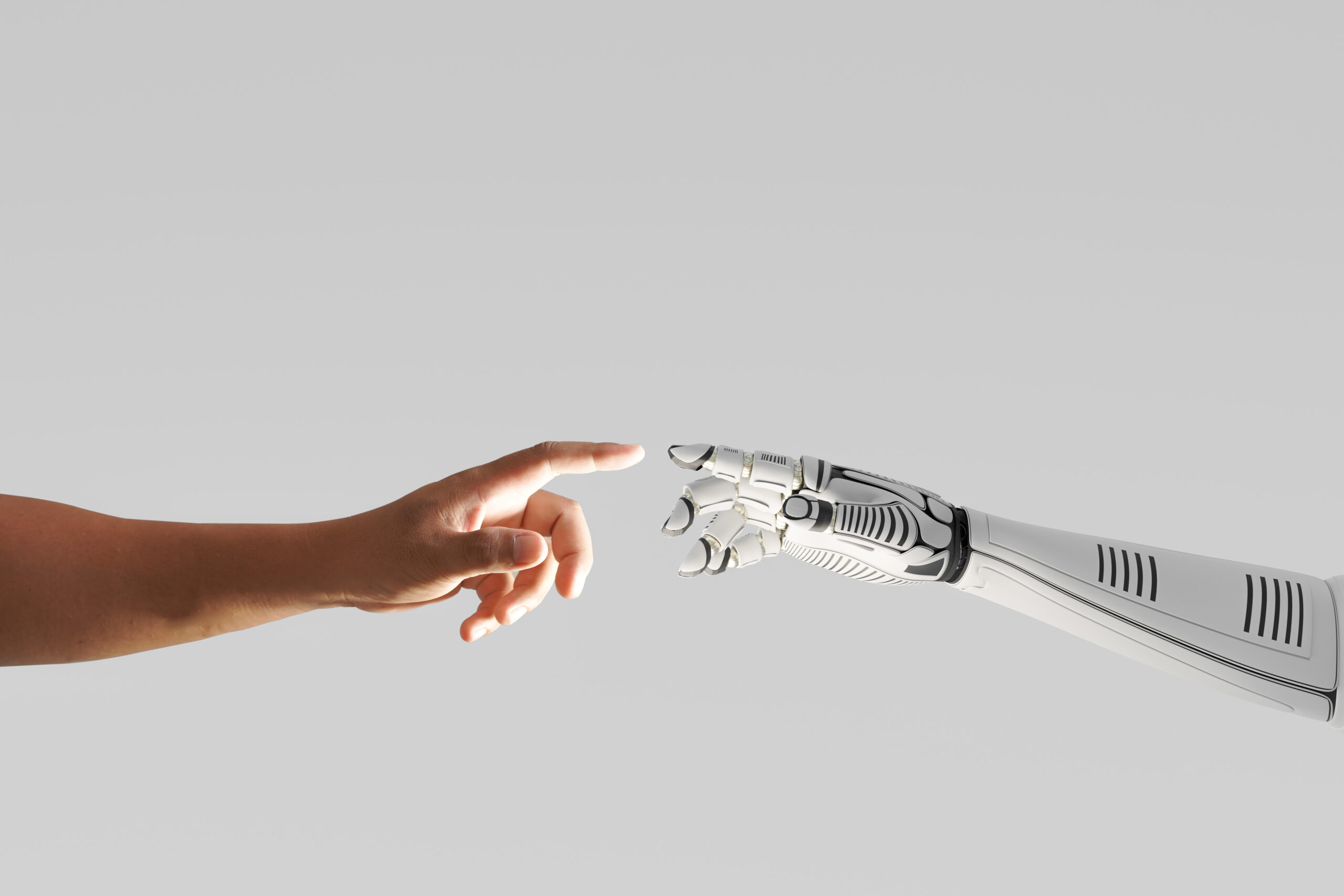




The AI-enabled medical devices market has transitioned from “experimental” to “essential,” evolving into a powerhouse estimated at approximately USD 18.89 billion in 2025, with a staggering growth rate of 38.5% from 2025 to 2033. This is the reality of healthcare in 2026.
Imagine waking up to a notification on a personal smart ring. It’s not a social media alert or a calendar reminder. Instead, it’s a gentle nudge: “Your heart rate variability and sleep patterns suggest a 15% increase in systemic stress. A 10-minute guided breathing session is recommended to prevent a potential hypertensive spike.”
“Invisible” Revolution: Intelligence in Every Handheld
In 2026, technology has moved past the era of standalone AI tools. Today, AI is the “nervous system” of medical hardware. Whether it’s a handheld ultrasound or a robotic surgical arm, intelligence is baked into the silicon.
- AI-Guided Imaging: Tools like the UltraSight Echo Stewardship Platform, which received landmark FDA expansion on January 06, 2026, now allow non-specialists to capture diagnostic-quality cardiac images. The AI acts as a virtual “GPS,” guiding the probe to the perfect angle in real-time.
- The Rise of the “Smart Implant”: A surge in orthopedic and cardiac implants that don’t just sit there; they talk back. Orthopedic implants now monitor bone healing and load-bearing in real-time, while neuro-implants adjust stimulation patterns autonomously to suppress tremors. On November 14, 2025, ROSA Knee with OptimiZe received FDA 510(k) clearance. This AI-driven update uses data from over 44 million patient days to move away from “mechanical alignment” toward personalized alignment based on a patient’s specific phenotype and gait data.
- The da Vinci 5 is the defining med-tech story of 2026. Boasting 10,000x more compute power, its “Hub” architecture enables augmented dexterity by integrating live 3D models and real-time Force Gauge feedback on tissue tension. This fusion of hardware and software marks a revolutionary leap in surgical precision.
From “Reactive” to “Predictive”: The Home-as-a-Hospital
The hospital walls are thinning. The trend of Hospital-at-Home has been supercharged by AI-enabled wearables that offer medical-grade accuracy.
- Next-Gen Wearables (CGMs): Continuous Glucose Monitors have evolved into predictive powerhouses. By 2026, they no longer just report current levels; they use Edge AI to provide “hypo” alerts that forecast diabetic emergencies before they happen, allowing for immediate, proactive adjustments.
- Medical-Grade Smart Rings: The trend toward miniaturization has peaked with rings that offer clinical-standard SpO2 and ECG tracking. These devices are now primary tools for the early, non-invasive detection of Atrial Fibrillation (AFib) and sleep apnea, often identifying risks weeks before a patient feels symptoms.
- AI-Enabled Smart Inhalers: These devices now perform real-time analysis of both “cough acoustics” and environmental air quality data. By synthesizing these two data streams, the AI can predict a potential asthma attack up to 24 hours in advance, giving patients a vital window for preventive care.
- GE HealthCare & NXP (January 06, 2026): A landmark collaboration to bring Edge AI to the bedside. At CES 2026, they showcased voice-controlled anesthesia systems and intelligent monitoring for neonates that can predict distress minutes before it occurs.
Navigating the 2026 Regulatory & Coding Landscape
One of the biggest drivers of this market surge in 2026 has been the “Great Regulatory Unlocking.”
- FDA Modernization: The FDA’s revised Clinical Decision Support (CDS) Guidance (released Jan 2026) has “cut the red tape,” allowing lower-risk AI wellness tools to reach consumers faster while maintaining gold-standard safety for high-risk diagnostics.
- The CPT Revolution: For the first time, the 2026 CPT Code set includes nearly 300 new codes specifically for digital health and AI. This means doctors finally have a clear path to get reimbursed for using AI to monitor patients remotely, making these devices a viable business model for clinics worldwide.
The Human Element: Ethics and the “Black Box”
As one embraces these silicon doctors, the industry is facing a critical reckoning with trust. In 2026, “Explainable AI” (XAI) has become a mandatory standard.
“Healthcare providers no longer just want to know what the AI found; they need to know why it found it. Transparency is the new currency of clinical trust.”
Major players like Philips, GE HealthCare, and Medtronic are focusing on “Ambient Intelligence”, systems that work in the background to reduce clinician burnout by handling documentation, while the human doctor focuses on the patient.
The Bottom Line
The AI-enabled medical devices market is no longer just about “cool gadgets.” It is a fundamental shift toward Precision Medicine. By the end of 2026, the question won’t be “Does this device have AI?” but rather “How did one ever practice medicine without it?”