




Key Highlights
- A stronger U.S. dollar pressured several metal prices.
- Copper gained support from tight concentrate availability.
- Lithium and cobalt faced significant downward pressure.
- Chromium led tracked commodities with 4.8% monthly growth.
- Regional premiums, duties, and freight complicated delivered costs.
In this article
A Divergent October for Non-Ferrous Metals
Base Metals: Copper Strength Contrasts with Aluminum and Zinc
Battery Metals Face Inventory and Policy Pressure
Specialty and Precious Metals Follow Different Drivers
Procurement Priorities: Look Beyond the Exchange Benchmark
A Divergent October for Non-Ferrous Metals
October brought contrasting non-ferrous metals movements. A stronger U.S. dollar, rate expectations, and expanding mine output weighed on the broader complex. Individual commodities responded differently to feedstock availability, inventories, regulations, and logistics.
Exchange benchmarks alone may not reveal the actual cost of securing material. Premiums, freight, duties, and supply constraints also matter. Non-ferrous metals pricing intelligence helps procurement teams assess them during contract and inventory planning.
Base Metals: Copper Strength Contrasts with Aluminum and Zinc
Copper was a notable exception. Record-low spot treatment charges for copper concentrate reflected constrained spot availability and weaker industrial activity. Chinese domestic copper prices averaged 1.0% higher month-on-month, while U.S. prices declined 0.9% as premiums over LME cash benchmarks narrowed.
Aluminum declined as markets anticipated smelter recoveries. LME settlement prices fell from USD 3,254 per ton on September 25 to USD 3,055 on October 12; three-month futures hovered near USD 3,000 by mid-month. Premiums diverged: the U.S. Midwest stood at USD 2,312 per ton, while Rotterdam duty-paid premiums were USD 550–585 per ton.
Zinc hit a multi-month low of USD 3,664.9 per ton on October 16 amid recovering Chinese mine production and expected export growth. Tighter Western availability lifted the Rotterdam SHG premium to USD 330 per ton on October 13. Nickel and tin softened; lead remained stable.
Buyers should therefore assess benchmarks alongside regional premiums: a falling exchange price does not guarantee a lower delivered cost.
Battery Metals Face Inventory and Policy Pressure
Battery and energy metals saw sharp adjustments. Lithium carbonate reached its lowest valuation in nearly ten months; Guangzhou futures fell almost 11% intraday on October 12. Concerns about proposed EU tariff caps on Chinese hybrid vehicle imports and projected supply expansion through 2027 contributed to the move. China’s domestic assessment averaged 16.6% below September.
Cobalt weakened as delayed intermediate shipments from the Democratic Republic of the Congo arrived in China, increasing spot availability. The inflow limited supplier pricing power despite steady battery manufacturing orders. Buyers should monitor duty structures and bonded warehouse inventories alongside prices.
Specialty and Precious Metals Follow Different Drivers
Minor and specialty metals remained fragmented. Export licensing, including measures in China, influenced availability of antimony, manganese, and rare earth elements. Chromium Coarse Particle led tracked commodities, with average month-on-month growth of 4.8% across its top three geographic markets and high price volatility.
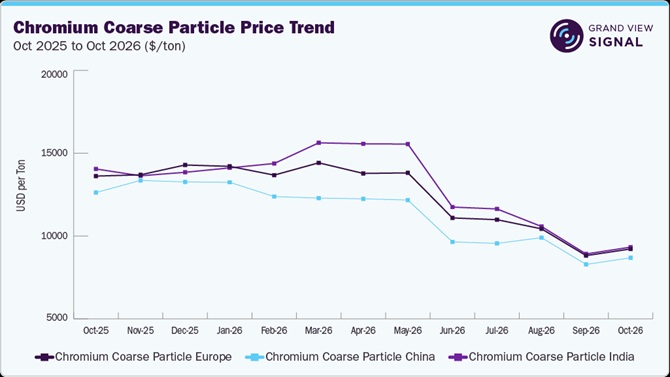
Get Full Access to Price Trends & Market Drivers.
Freight costs and war-risk insurance premiums further complicated landed costs along important maritime corridors.
Precious metals reflected financial drivers. Gold reached a two-month low on October 7 as markets priced in an 85% probability of a December U.S. Federal Reserve rate increase, supporting the dollar and Treasury yields. Palladium hit a 13-month low on October 21 amid automotive catalyst demand shifts and spot availability.
Procurement Priorities: Look Beyond the Exchange Benchmark
Three priorities emerge for procurement teams.
First, separate exchange prices from regional premiums, duties, freight, and quality adjustments. The U.S. Midwest–Rotterdam aluminum premium gap shows how location changes purchase economics.
Second, monitor feedstock signals. Low copper concentrate treatment charges can indicate tight physical supply and offer context for refined metal availability.
Third, track regulations and inventories. Export licensing, vehicle trade measures, and delayed cargoes can quickly change metal availability and valuations.
Turning Market Data into Sourcing Insight
Grand View Signal provides commodity pricing information to help businesses monitor market movements and regional cost drivers. Assessing benchmarks alongside premiums, supply conditions, and policy developments gives procurement and risk teams a fuller view of exposure.
Because copper, lithium, chromium, and gold respond to different forces, one broad metals indicator is insufficient. Non-ferrous metals pricing intelligence supports informed contract reviews, inventory planning, and sourcing.
Frequently Asked Questions
1. What influenced non-ferrous metal prices in October?
A stronger U.S. dollar, interest-rate expectations, changing mine output, inventory inflows, and trade regulations influenced prices.
2. Why did copper prices perform differently across regions?
Chinese domestic copper prices rose 1.0% month-on-month, supported by concentrate tightness, while U.S. prices declined 0.9% as regional premiums narrowed.
3. What caused the decline in lithium carbonate prices?
Concerns about proposed EU tariff caps on Chinese hybrid vehicle imports and projected supply expansion contributed to the decline.
4. Which tracked commodity recorded the strongest monthly growth?
Chromium Coarse Particle recorded average month-on-month growth of 4.8% across its top three geographic markets.
5. Why should procurement teams monitor regional premiums?
Regional premiums, freight, duties, and quality adjustments can cause delivered costs to differ from international exchange benchmarks.