



Key Highlights
- Supply Chain Disruptions Are Creating Rapid Market-Wide Price Shocks
- Benzene Shortages Are Squeezing Downstream Chemical Margins
- Regional Supply and Price Gaps Are Reshaping Global Chemical Trade
- Policy Support and Alternative Sourcing Are Becoming Critical for Supply Resilience
- Real-Time Market Intelligence Is Driving Faster and More Strategic Decision-Making
Standard supply chain operations typically follow a predictable rhythm: vessels sail smoothly, raw materials arrive as scheduled, and downstream factories turn those inputs into automotive components, packaging, and household goods.
Over recent weeks, this smooth flow has faced severe disruptions. From West Asian naval choke points to active chemical ports along the Yangtze, chemical supply chains navigate highly unpredictable conditions. Geopolitical friction, localized supply shortages, and uneven consumer demand force producers, traders, and buyers to constantly adapt their operational strategies.
In this volatile landscape, accessing real-time commodity pricing intelligence, such as Grand View Signal, is essential to predict cost swings, spot regional price discrepancies, and protect operational margins before market disruptions hit bottom lines.
Key Industry Challenges and Strategic Responses
Below is a detailed analysis of the five core structural drivers reshaping global chemical trade flows, spot prices, and operational strategies.
1. Maritime Security Risks and Feedstock Volatility Across Key Trade Corridors
When maritime security falters across vital corridors like the Strait of Hormuz, the impact quickly ripples through petrochemical value chains. Recent shipping threats in West Asia generated widespread volatility across core feedstocks, including crude oil, naphtha, natural gas, sulphur, and polymers. Benchmark olefin and polyolefin prices jumped over 30% within days, mirroring sharp spikes in naphtha and LPG.
Monoethylene glycol (MEG) serves as a primary example. As a fundamental input for polyester fibers, packaging, and textiles, MEG is among the Gulf’s largest chemical exports, with roughly 6.5 million tons shipped in 2025 alone. Disruptions to this transport route directly strain major importing nations.
China, the top global consumer, faces acute domestic shortages where MEG prices surged 5.5% in July 2026, compared to USD 616/ton in July 2025. Other key regional importers—including India, Indonesia, Pakistan, Vietnam, and Thailand—face corresponding pressure on raw material availability and margins.
Geography dictates the severity of these disruptions:
- Import-Dependent Regions: Markets relying heavily on West Asian intermediates suffered abrupt price surges and tight localized availability.
- Domestic-Centric Markets: Jurisdictions supported by strong domestic production bases or direct pipeline infrastructure remained relatively stable, avoiding severe logistics surcharges.
2. Upstream Benzene Squeezes and the Margin Crunch on Downstream Derivatives
Across East Asia, a traditional supply squeeze hit benzene, an essential building block of the chemical industry.
As Chinese refineries entered planned turnarounds and import shipments slowed, domestic inventory levels declined rapidly. Commercial stockpiles across key distribution terminals in Jiangsu ports dropped toward record lows following consecutive weeks of heavy destocking.
Simultaneously, several major downstream styrene monomer facilities restarted, creating immediate demand for raw benzene. This supply-demand imbalance triggered a swift rally in benzene spot prices, impacting derivative value chains:
- Styrene & Polystyrene: Higher input costs escalated expenses for insulation materials and protective packaging.
- Aniline & Caprolactam: Upstream cost pressures flowed into polyurethane foams and nylon production.
- Phenol & Acetone: Margin compression emerged for manufacturers of epoxy resins and industrial solvents.
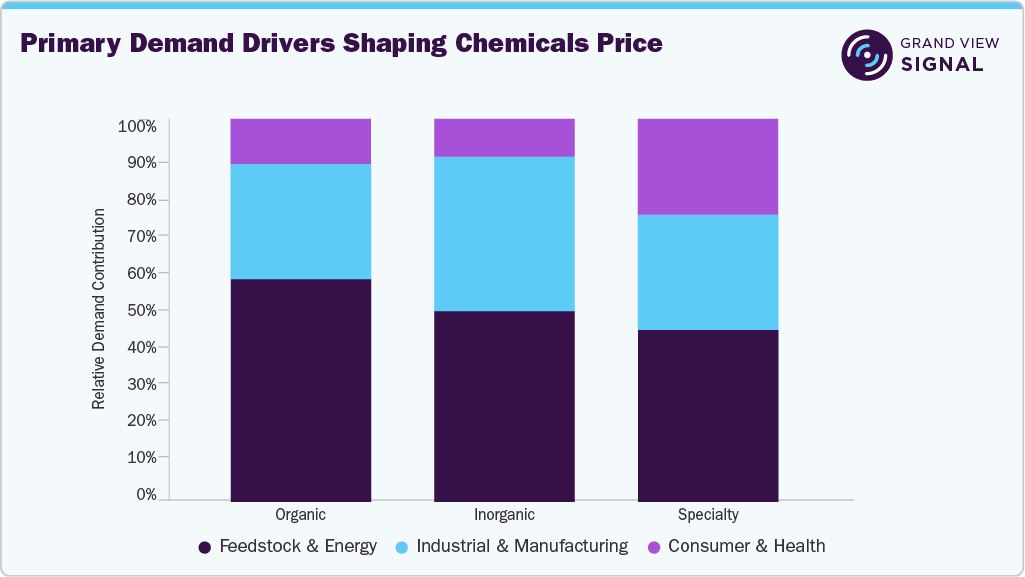
Because end-user demand for finished consumer products remained muted, downstream manufacturers struggled to pass these elevated feedstock costs to end buyers, keeping profit margins constrained.
Get Full Access to Price Trends & Market Drivers.
3. Strategic Policy Relief: How Targeted Interventions Cushion Domestic Processing
Faced with shipping delays and rising import costs for critical chemical inputs from West Asia, domestic Indian manufacturers faced potential production slowdowns. In response, local regulatory authorities and industry bodies implemented targeted administrative adjustments to protect domestic supply networks.
To keep critical manufacturing sectors running, policymakers deployed specific intervention tools:
- Propylene Reallocation: Redirecting domestic propylene streams toward isopropyl alcohol (IPA) and propylene glycol production to sustain local output.
- Coordinated Methanol & Ammonia Inflows: Facilitating direct procurement from state-owned enterprises and global trading houses to maintain steady raw material supplies.
- Customs and Quality Relief: Granting full customs-duty exemptions on select petrochemical imports while temporarily waiving specific Quality Control Orders (QCOs), allowing manufacturers to source from alternative international markets.
These rapid policy measures provided a buffer for key export industries—including pharmaceuticals, flexible packaging, automotive components, and textiles—allowing domestic processing plants to maintain stable operating rates.
4. High Operational Costs vs. Cautious Demand: Managing Industrial Mismatches
While select upstream feedstocks experienced price rallies, the wider chemical industry faces a structural imbalance: high operating expenses combined with cautious purchasing across end-consumer markets.
Industrial sectors such as commercial construction, automotive manufacturing, architectural coatings, and home appliances are operating conservatively. Without strong pull from end markets, primary chemical producers find it difficult to implement broad price increases for finished polymers and organic chemicals.
Consequently, price gains remain confined to specific, physically constrained product lines rather than reflecting a broad industrial recovery.
5. The Localization Pivot: Building Integrated Downstream Hubs for Resilience
Seeking to avoid constant global logistics shocks, major chemical-producing nations are taking control of their supply networks by investing heavily in domestic processing capacity and regional infrastructure.
This structural pivot is particularly evident across the Middle East and North Africa (MENA), where countries are shifting from raw material exports toward building integrated downstream industrial hubs:
- United Arab Emirates (UAE): Advancing the TA’ZIZ Industrial Chemicals Zone in Ruwais. Key milestones, such as securing $2 billion in financing for a world-scale methanol plant and launching feasibility studies for specialty facilities like MDI, demonstrate the shift toward high-value, localized processing.
- Saudi Arabia: Expanding advanced materials partnerships and streamlining chemical clearance protocols to keep downstream processors agile.
- Egypt: Executing key mining and industrial reforms, including launching a $1 billion integrated phosphate fertilizer complex at Ain Sokhna alongside private partners to process domestic minerals locally.
- Morocco: Utilizing its natural resources by expanding domestic sulphuric acid, phosphoric acid, and processing infrastructure to supply international agricultural sectors.
How Grand View Signal Solves the Chemical Industry’s Volatility Crisis
Navigating geopolitical chokepoints, unexpected refinery turnarounds, and evolving regulatory mandates requires moving beyond reactive management. Chemical leaders can no longer depend on lagging data or unverified market rumours.
Grand View Signal functions as a strategic technology solution, converting complex market signals into actionable intelligence:
- Navigating Freight & Feedstock Disruption: When shipping routes face friction, Signal offers real-time monthly price assessments and risk analytics across aromatics, polymers, methanol, and sulphur. Leaders can evaluate true Average Selling Prices (ASP) across specific regions, enabling procurement teams to hedge effectively rather than engage in panic buying.
- Anticipating Supply Pinches: Rather than being surprised by destocking events like low benzene inventories at Jiangsu ports, Signal combines historical datasets with forward-looking forecast models. This allows producers and buyers to anticipate upstream price surges before derivative chains (styrene, aniline, phenol) experience margin compression.
- Leveraging Regulatory & Regional Shifts: As nations like India adjust customs tariffs or MENA economies build integrated hubs like TA’ZIZ, Signal tracks regulatory changes and regional risk profiles. Subscribing organizations can evaluate alternative sourcing options and align supply chains with shifting trade patterns.
- Protecting Downstream Margins: To address the gap between high input costs and muted consumer demand, Signal provides granular cost-structure breakdowns and predictive risk models. This enables commercial teams to refine contract terms, defend margins, and execute data-driven pricing strategies.
Managing chemical price volatility demands real-time visibility. Grand View Signal addresses market fluctuations through dynamic commodity pricing intelligence, uniting real-time price assessments, historical benchmarks, and predictive forecast models across 200 commodities. By tracking feedstock movements, policy changes, and regional price spreads, Signal enables procurement and finance teams to transition from reactive buying to proactive, margin-protective sourcing.