

Consider a hospital ward where nurses cannot be everywhere at once. This shortcoming in the healthcare industry is being addressed by AI video analytics. AI video analytics ensures patients are monitored continuously. The AI video analytics system detects when an elderly patient tries to leave bed unassisted, instantly alerting staff to prevent a fall. Lives are saved, costs are reduced, and care becomes proactive rather than reactive. Meanwhile, at a construction site in Dubai, safety managers once relied on manual patrols to check helmets and harnesses. Now, AI video analytics automatically detects violations and alerts supervisors instantly, reducing accidents and improving compliance.
These stories show how AI video analytics is not confined to traditional surveillance. It is being applied in diverse settings, from hospital wards to construction sites to financial institutions, where it changes outcomes by providing actionable insights. According to Grand View Research, the AI video analytics market is projected to reach USD 71.3 billion by 2033, indicating a rapid expansion at a staggering CAGR of 21.4%. This growth is driven by the demand for advanced surveillance, operational efficiency, and public safety solutions.
From Innovation to Application
As industries adopt AI video analytics, the market is entering a phase of innovation that is reshaping how organizations use video data. The bridge between traditional monitoring and intelligent analytics lies in the ability of AI to process massive amounts of video footage, extract meaningful insights, and deliver them in real time. This shift is creating new opportunities across sectors, from smart cities to retail, healthcare, and manufacturing.
Practical Impact Across Industries
From an industry perspective, AI video analytics is becoming a strategic enabler. Each sector is adopting it to solve pressing challenges, improve efficiency, and unlock new value streams. Some of the important sectors implementing AI video analytics are indicated below:
Smart Cities
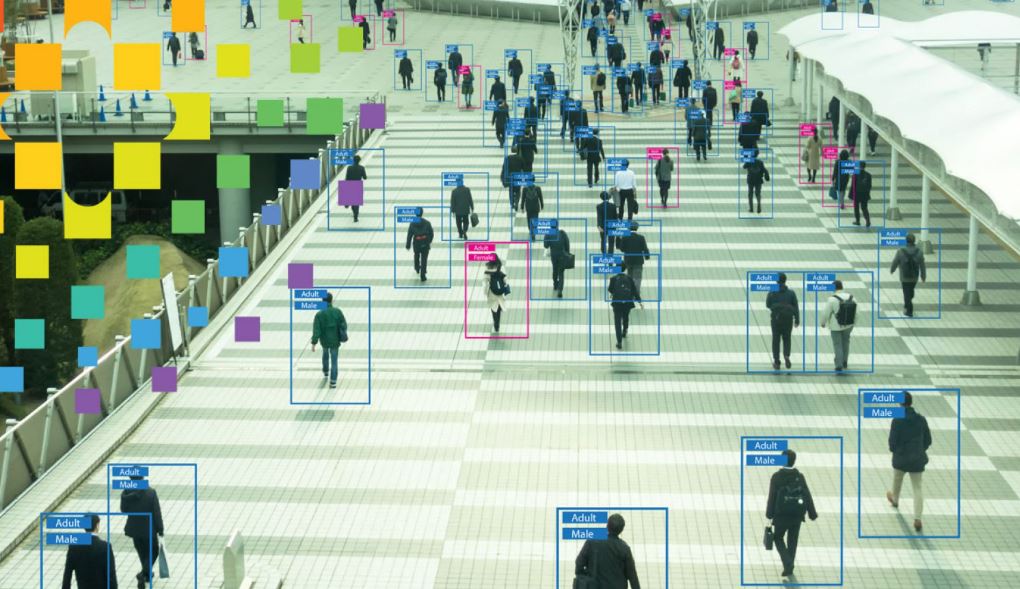
Urban planners and municipal authorities are under pressure to manage a growing population and complex infrastructure. AI video analytics provides real-time visibility into traffic flow, crowd density, and public safety. For example, NVIDIA Metropolis and Isarsoft solutions allow cities to automatically adjust traffic signals, detect congestion hotspots, and respond faster to emergencies. In practice, this means fewer accidents, smoother commutes, and better allocation of resources during peak hours or public events.
Retail
Retailers face intense competition and shrinking margins, which makes customer insight and loss prevention critical. AI video analytics is being used to track shopper journeys, measure dwell time, and identify theft in real time. AIVID offers people counting and queue monitoring, while Memories.ai transforms in-store footage into actionable insights that improve store layouts and marketing strategies. For retailers, this translates into higher sales, reduced shrinkage, and more personalized customer experiences.
Healthcare
Hospitals and care facilities are adopting AI video analytics to improve patient safety and operational efficiency. Falls among elderly patients are a major concern, and systems like Drishticam AI and Care.ai provide continuous monitoring that alerts staff instantly when risks are detected. In senior care, predictive monitoring tools from IronHive proactively flag unusual patient movements, reducing reliance on manual sitters and lowering costs. For healthcare providers, the impact is twofold: improved patient outcomes and more efficient use of staff resources.
Transportation and Logistics
Airports, train stations, and logistics hubs depend on smooth passenger and cargo flow. AI video analytics helps detect unattended baggage, monitor crowd movement, and optimize loading operations. Companies like Axis Communications and Hikvision are deploying smart traffic and logistics solutions that reduce delays and enhance safety. For operators, this means fewer disruptions, better compliance with safety regulations, and improved customer satisfaction.
What’s Driving the Next Wave of AI Video Analytics
Several developments are driving the next phase of AI video analytics. High-performance facial recognition systems from NEC, AnyVision, and VisionLabs are achieving faster inference, stronger anti-spoofing capabilities, and more privacy-conscious architectures. Behavioral analytics is advancing equally rapidly, with platforms like BriefCam analyzing micro-movements, trajectory deviations, and crowd patterns to detect anomalies that traditional systems would overlook.
Retail environments are benefiting from the convergence of video analytics with RFID, shelf sensors, and POS data, creating multi-modal intelligence frameworks capable of validating planograms, preventing stockouts, and refining merchandising strategies. Cities are deploying advanced traffic analytics that not only monitor intersections but model future congestion patterns using historical video data. Meanwhile, cloud-native ecosystems, such as AWS Panorama, Azure Video Indexer, and Google Vertex AI Vision, are making deployments more scalable and policy-driven, especially when combined with IoT sensor networks. Healthcare analytics continues to evolve, moving into gait analysis, ambulation scoring, and early deterioration detection.
From Surveillance to Strategic Intelligence
For businesses, the adoption of AI video analytics means more than cost savings. It represents a shift toward proactive decision-making, where video data becomes a source of actionable intelligence. For governments, this means enhanced public safety and more effective resource allocation. For consumers, this translates into smoother experiences, whether shopping, traveling, or receiving healthcare. In summary, AI video analytics is evolving into a powerful tool that bridges the gap between technology and human needs. The innovations in facial recognition, behavioral analytics, retail intelligence, traffic management, and healthcare monitoring are proof that video data, when combined with AI, can deliver transformative outcomes.